Malpractice Minute
The Malpractice Minute is a monthly, real-life OMS malpractice case study — with risk management tips and insights to help you practice more safely. Learn from others, explore how malpractice issues unfold, and gain valuable tips on how to protect yourself and your patients. After reading the case, put your knowledge to the test with the chance to win $50 by participating in the monthly Malpractice Minute contest.
All-on-4 Implant Procedure Leads to Malpractice Claim Against OMS
Marc Leffler, DDS, Esq.
Reading time: 8 minutes
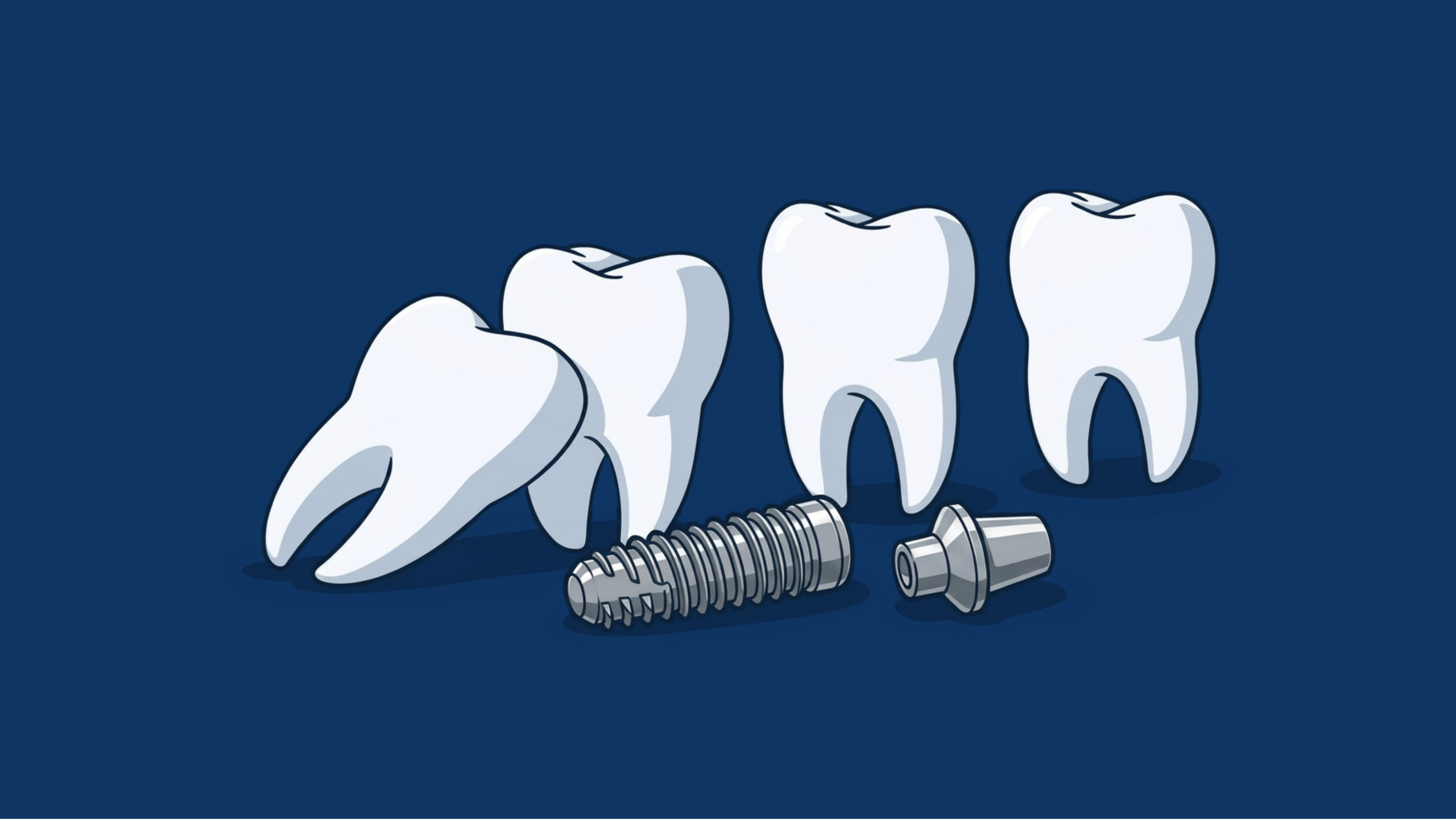
This real-life OMS case study illustrates how patient anatomy, clinical judgment, and external pressures can turn a complex treatment plan into a malpractice claim. Learn why it’s critical to trust your professional judgment, recommend only viable treatment options, and prioritize patient safety when weighing surgical risks and alternatives.
Key concepts
- All-on-4 procedure leads to serious complication
- Trusting your clinical judgment
- Risk management lessons for implant dentistry
Background facts
R was a 61-year-old generally healthy man who had worn maxillary full dentures for years, but was becoming increasingly dissatisfied with them, both functionally and esthetically. His lower arch posed no problems for him: other than a 3-unit fixed bridge on the right and a 4-unit bridge on the left, he had natural teeth in place. In the past, he was a nearly pack-a-day smoker, but he had since overcome that habit. He presented to a multispecialty dental office he had seen advertised locally, seeking to improve the condition of his maxilla.
He initially saw a prosthodontist, who evaluated the mouth and concluded that an implant-supported prosthesis would work well for R. Per office policy, the on-site oral surgeon would handle the implant aspect of treatment, with the patient then returning to the prosthodontist for the restoration. That same day, the OMS, Dr. G, met with R, ordered a CBCT study, reviewed it, and discussed the available options. Because of the paucity of maxillary bone — especially posteriorly — and “low-lying” maxillary sinus cavities, a traditional implant arrangement would not be possible. So, 2 options were available: (1) perform bilateral sinus lifts with bone grafting, allow for an adequate healing period, place 3 implants (potentially) on each side, and then restore the maxilla prosthetically after osseointegration; or (2) do an all-on-4 procedure using the pterygoid bones bilaterally for both posterior implants, place a provisional prosthetic appliance that same day, and later convert to a permanent prosthesis after integration.
The office management encouraged the most time-efficient case completions possible. With that in mind, Dr. G and the prosthodontist discussed the available options, with Dr. G expressing some concern about the radiographically appearing rather thin pterygoids, particularly on the right side. However, the prosthodontist did not want to wait for the entire sinus lift process to play out, and encouraged the OMS to do the all-on-4 approach, despite her stated concerns. Dr. G (reluctantly) agreed, and so did R, after they had a full discussion about the most common risks, benefits, and options, with R signing a consent form.
On the day of treatment, R took the oral sedative prescribed for him by Dr. G, just before leaving home. Dr. G injected local anesthetic solution buccally and palatally across the entire upper jaw. Because she is left-handed, Dr. G began with her preferred side, the left, because access was easier. Referring to the CBCT images, she uneventfully placed 2 implants on the left side, 1 at the approximate site where tooth #11 had been, and 1 angled into the pterygoid: both were clinically stable. She then turned to the right side to place 2 implants before the prosthodontist placed the ready provisional. The implant near the prior site of the upper right canine was smoothly placed. In performing the right pterygoid osteotomy, Dr. G’s concern came to fruition, as the bur, which had initially been met with typical bony resistance, suddenly fell into a void, which she presumed to be the pterygopalatine fossa. When she backed out the handpiece, bright red, pulsating blood heavily flowed into the mouth, clouding the entire field.
Her initial approach was to pack the site with gauze strips, which did slow the flow, but the gauze quickly filled with blood and continued to do so despite repeated packing. Dr. G believed that she had pierced into (a branch of) the right maxillary artery. With her being unable to gain hemostatic control, and being in an outpatient setting with an awake patient, she attempted to gain access to the source of the bleed by entering the maxillary sinus through a Caldwell-Luc approach, and then cutting a window through the posterior sinus wall to enter the fossa. But doing so only provided a second outlet of significant bleeding, leading her to conclude that ligating the artery required in-hospital care by a head and neck surgeon. R was transported by ambulance to a nearby medical center, with Dr. G accompanying him to try to maintain site pressure as they travelled. R was emergently taken to the OR, where he was induced and intubated, and where an ENT surgeon unsuccessfully attempted access to the torn vessel endoscopically, ultimately ligating the vessel some 2 hours later by way of a preauricular approach infratemporally. R remained in hospital for a week, and missed work for more than a month, left with a scar and always feeling limitations to his usual exercise routine.
Legal action
R’s newly retained attorney obtained all of the relevant dental and medical records, and sent them on to an academic-based OMS for review. That expert passed on his conclusions to the attorney who hired him: that Dr. G succumbed to external pressures and performed a procedure that she knew was concerning and risky, given the specific anatomy presented, and that the preferred set of procedures for this patient would have begun with the sinus lift and graft approach. The attorney also contacted the treating ENT, who was willing to provide his opinion that the bleed and the resultant surgery and after-effects were due to an ill-conceived surgical treatment plan by Dr. G.
Dr. G contacted her malpractice carrier when she provided records to R’s attorney, and again when she was served with papers that initiated the lawsuit against her. She had personally been deeply upset by the events, now some months ago, and she told her assigned attorney that she was eager to put this behind her, partly for the personal impact but also because she realized that she had not exercised her best judgment.
Settlement moves began quickly, with an agreement reached before discovery even started. In addition to money, which covered medical costs, physical and emotional distress, and lost income, R made a somewhat unusual request: that Dr. G write an apology and explanation to him, which he felt that he needed to close the chapter. Despite her attorney advising Dr. G against doing so, explaining the potential impacts upon a Board complaint (which never happened) or hospital credentialing, she did as R had asked, because she, too, needed the closure.
Get useful content from MedPro delivered to your inbox.
Takeaways
Pressures are frequently placed on practitioners, including oral surgeons, from sources as diverse as patients, dental or medical colleagues, and practice supervisors and owners. The reasons for the responses to those pressures are equally diverse, from the need to maintain employment, to conflict aversion, to ego. In the end, though, all that really matters on the legal side of practice are adherence to standards of care and principles of ethics. Perhaps, a safe approach for practitioners to take is that if something simply does not feel right, stay away from it. While that might not always be practical, it can at least be an internal starting point, if not ultimately the end point.
It is the general rule, rather than the exception, that there are most often multiple options/alternatives to overcome dental and surgical problems. Principles of informed consent dictate the requirement to advise patients of, among other things, available alternatives. But that does not mean every alternative, only the viable ones. And if an alternative is not viable for any reason, whether because of patient anatomy, underlying patient medical conditions and social habits, or provider limitations (based upon ability or experience), that alternative falls out of the realm of informed consent. Here, the anatomy of R’s right pterygoid and, perhaps (reading between the lines) her own limitations, Dr. G seemingly knew that an all-on-4 plan was not viable for R. Fighting her better judgment was a clear factor in the events and injuries.
All procedures carry risk. It is part and parcel of healthcare delivery, particularly when surgery is involved. Practitioners appropriately take specific risks into account when weighing the potential coming to fruition of those risks against the benefits of doing the procedure. There is no one-size-fits-all formula to use to come to a decision, but instead a subjective process that is individual to every surgeon, considering a host of factors. Many risks come to pass (in the form of injury) in the absence of any negligence, with that concept being a foundation for much of malpractice defense, but when injuries occur because of negligence, that often becomes the very basis for plaintiffs’ cases against doctors.
Decisions about settlement versus trial are extremely case-specific, with the insurer, counsel, and all litigants playing significant roles. Practitioners who have “pure consent” policies are permitted, per policy language, to withhold consent to a settlement, in favor of going to trial. But in cases where practitioners do provide their consent to settle, that does not mean that the malpractice carrier must then settle the case, but simply that it may agree to a settlement. Think of it as a permission slip, but not a requirement slip.
Summary of takeaways
- External pressures should never outweigh clinical judgment when determining the most appropriate treatment plan.
- Not every treatment option is suitable for every patient — anatomy, provider experience, and overall risk must be carefully evaluated before proceeding.
- When complications occur, treatment decisions that fall outside the standard of care can increase liability exposure and lead to malpractice claims.
Note that this case presentation includes circumstances from several different closed cases, in order to demonstrate certain legal and risk management principles, and that identifying facts and personal characteristics were modified to protect identities. The content within is not the original work of MedPro Group but has been published with consent of the author. Nothing contained in this article should be construed as legal, medical, or dental advice. Because the facts applicable to your situation may vary, or the laws applicable in your jurisdiction may differ, please contact your personal or business attorney or other professional advisors if you have any questions related to your legal or medical obligations or rights, state or federal laws, contract interpretation, or other legal questions
Malpractice Minute Contest*
Submit your answer to the question using the form below! The winning answer will receive a $50 gift card.
Had there been a Board complaint by or on behalf of R, alleging ethics and standard of care violations against Dr. G, what reasonable defenses could she have employed to protect her actions?
*NO PURCHASE NECESSARY. The “Malpractice Minute Contest” is subject in all respects to the complete Official Rules available by clicking here.
Read previous Malpractice Minute case studies

Coding and Consent Issues Result in OMS Malpractice Lawsuit
Learn how upcoding disputes and informed consent gaps can lead to OMS malpractice claims, patient distrust, and legal action.

Informed Consent Shortfall Leads to OMS Malpractice Claim
Oral and maxillofacial surgeons can learn how informed consent gaps, documentation issues, and procedure-based standards of care may contribute to OMS malpractice claims.

How a Strong Emergency Response Still Resulted in a Fine
Strong emergency response and regular drills helped during a sedation crisis, but one compliance gap still led to Board action.