Patient Sues OMS for Malocclusion Treatment Errors

Marc Leffler, DDS, Esq.
July 28, 2025

Reading time: 8 minutes
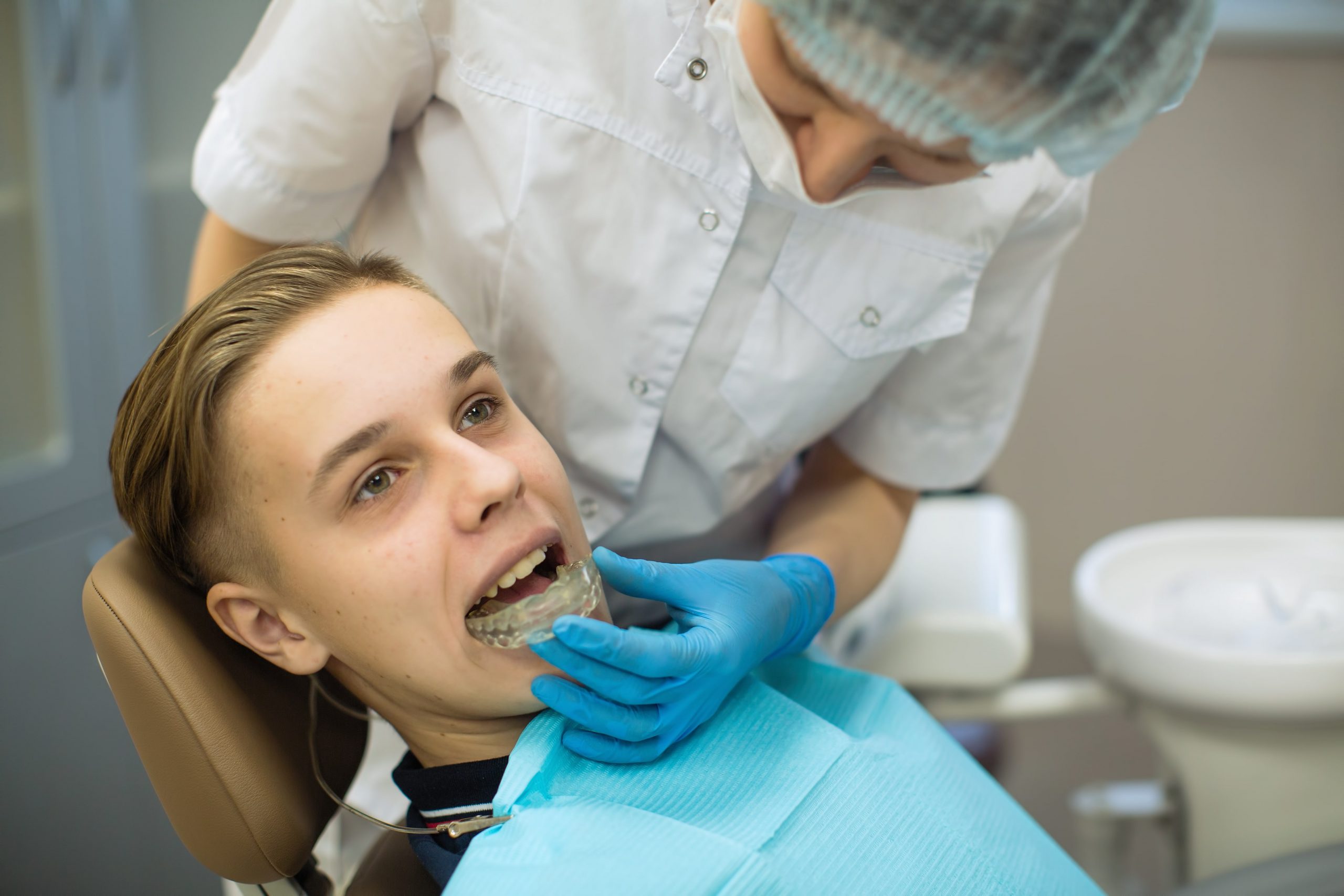
Treating patients with dental malocclusions requires careful evaluation and treatment planning. In this case study, after failing to correct a mandibular prognathism with aligners, a dentist refers the patient to an orthodontist. With the help of that orthodontist, an oral surgeon performs orthognathic surgery, but the procedures lead to root resorption. Later, the patient sues all three practitioners for negligence.

Key Concepts

  • Importance of malocclusion evaluation for both skeletal and dental issues
  • Risks of multiple defendant dentists who had treated the same patient
  • Benefits of collaboration among dental professionals

Background Facts

T was a healthy 25-year-old man, 3 years out of college and trying to find his occupational path. T had excellent dental hygiene with a periodontium to match, but he had been bothered for years by what he often called his “Popeye jaw,” which he felt might be a factor in his repeated roadblocks in public-facing jobs. He discussed the issue with his longtime general dentist, Dr. G, who described the situation to T as a “large underbite.” Dr. G, who had recently completed a certification course given by a company that manufactured clear aligners, suggested placing those clear aligners, serially, to move the lower front teeth backward and the uppers forward, so that the lowers would be tucked under the upper front teeth. T agreed to the proposed plan, so treatment moved forward. But after a number of the serial aligners were placed and then replaced by the next in the series, T began to develop severe episodic bilateral jaw pain.

Unsure of what was taking place, Dr. G referred T to an orthodontist, Dr. O, with whom he had occasionally worked over the years. Upon seeing T, Dr. O took and then mounted an articulated set of study models, and obtained cephalometric and panoramic radiographs. Dr. O concluded that T’s problem was a skeletal malocclusion, caused by a combination of a prognathic mandible and a retrognathic maxilla, and not the dental malocclusion that Dr. G had begun to treat with aligners. Dr. O explained to T that she would need to place T in traditional orthodontic appliances to undo the severe tilting of the anterior teeth created by the aligners, which she believed to be the cause of the muscular pain T was experiencing. Dr. O further advised – with detailed explanation – that, after the teeth were “untilted” and a few rotated teeth were “unrotated,” T would need to be treated with orthognathic surgery to eliminate the skeletal-based bite issues.

T thought about Dr. O’s proposals for some time, getting opinions from family members and friends, some of whom encouraged him to go forward and others of whom discouraged it. But it was the ongoing discomfort that led T to take Dr. O’s treatment suggestion. Dr. O joined T and his father at the office of oral and maxillofacial surgeon, Dr. S. Dr. S wanted to review the diagnostics, in conjunction with intra- and extra-oral photographs that he took that day, so he asked everyone to reconvene 2 weeks later, at which time they would all discuss treatment options and potential risks. During that time period, Drs. O and S discussed T’s case and expressed their approaches to T and his father when they next met.

The plan presented was that Dr. O would perform the orthodontics just as she had earlier thought, after which Dr. S would perform a Le Fort I osteotomy to advance the maxilla and bilateral mandibular osteotomies to set that jaw back, thereby correcting the skeletal malocclusion. When the surgical sites healed, Dr. O would finish the process by making minor orthodontic movements to idealize the dental relationships vis-à-vis the “new” skeletal positioning.

Treatment went forward as expected, seemingly uneventfully. T’s pain resolved and he slowly returned back to his usual eating habits, with the approval of the treating doctors. However, his upper and lower anterior teeth were painful when he bit into hard foods like apples and bagels, and he became concerned about what he perceived as those teeth moving. When he returned to Dr. G for a recall exam and radiographs, it was discovered that he had a substantial amount of anterior root resorption that had never before existed prior to the whole course of treatment, which led Dr. G to refer T to a periodontist for evaluation. That periodontist completed a thorough periodontal assessment and then told T that the resorption was so significant – a fact that the periodontist found difficult to believe, given the relatively short treatment time – that he fully expected that T would lose between 6 and 8 of his 12 anterior teeth, likely within the next decade, if not sooner. T became extremely upset as he processed the likelihood of tooth loss and the costs that would accompany replacing them, plus the associated further delay in his career advancement.  

T sought and hired an attorney who was a dental malpractice “regular.” The attorney obtained all of T’s relevant records and had them reviewed by experts in orthodontics and oral surgery. Both concluded that the root resorption resulted from the inappropriate and repeated (back and forth) forces placed on the anterior teeth, over a relatively short time. They were unable to conclude whether it was the treatment of Dr. G or Dr. O, or both, which caused the mobility and presumptive tooth loss. The oral surgery expert would not say that the orthognathic surgery made that condition worse, but did say that Dr. S’s failure to inspect the condition of the anterior teeth before doing surgery led to his performing surgery which, at the very least, delayed diagnosis of the root resorption, so that the need for extraction going forward became solidified.

T’s attorney instituted suit against all 3 of T’s treating practitioners, asserting different roles: Dr. G and Dr. O, by way of their respective orthodontic treatments, exerted inappropriate forces so as to directly lead to root resorption. Dr. S failed to timely identify the root resorption prior to performing surgery, thereby postponing the discovery of that condition beyond the time when periodontal care could have been instituted to improve the chances of those teeth surviving. In addition to claiming, as damages, the anticipated loss of teeth and the procedures, with their associated costs to replace them, T also claimed lost earnings because missing front teeth is a far greater stumbling block to career advancement than the initial skeletal malocclusion, according to his attorney.

Once the suit was reported to the malpractice carriers for Drs. G, O and S, each was assigned individual defense counsel. Unfortunately, but immediately, the attorneys for Drs. G and O began what would be a prolonged finger pointing exercise against each other’s clients, claiming it was the other defendant, and not their client, who was truly at fault for the severe root resorption. Among the few things all defense counsel could agree upon was the entirely speculative nature of the claim of T’s career advancement being stifled, in a man whose career was not going anywhere from the start. When presenting that argument to the court, the judge agreed and dismissed that portion of the claim.

With no pre-trial agreement able to be put together, the case proceeded to trial. With all 3 defendants presenting experts who defended the treatments, the jury found in favor of the oral surgeon, Dr. S, concluding that he played no role in the moving of the teeth – but only in the moving of the bones in which those teeth sat – and that there was insufficient evidence that any delay he might have caused had any substantial effect upon tooth loss. With Drs. G and O continuing to place blame on each other throughout the trial, the jury determined that it was impossible to know which portion of the root resorption was caused by each. But it was clear that each of them did play a negligent role in that result, so liability was split evenly between both.

Takeaways

Anytime there are multiple defendant dentists in a single case, a risk always exists that they might become adversarial and “unjoined” in their respective defenses. It is for that reason that separate defendants are often represented by separate attorneys, even if those defendant dentists are insured by the same carrier, unless the facts and personalities are such that there is an unwavering sense that their defenses will not be in conflict with each other to any extent at all.

This case might well raise the question as to why T’s future career activities were deemed impermissible due to speculation, while the prospect of future tooth loss was allowed to proceed in the case, as non-speculative. The answer lies with the background and underlying facts – a track record, if you will. Here, T had no employment or career track record, and his own initial presenting concerns included a lack of prior career advancement, so it would have been pure (impermissible) speculation to posit that, had the whole treatment course gone well, he would then have succeeded in some, as-yet-undetermined, career path. For context, contrast that with the non-speculative nature of an employee who is well entrenched in a job or profession, and loses income and/or opportunities due to negligent treatment. On the other side of the coin, experts in this case opined that multiple teeth, which now had objective, disadvantageous crown-to-root ratios because of root resorption, were likely to be lost prematurely, based upon dental evidence, clinically and radiographically, rendering it non-speculative. This is true even with disagreeing experts, because all would be basing their views on their opposing interpretations of scientific evidence.

While we generally stay away from assessing practitioners’ clinical judgments, it is clear from the facts of this case that Dr. G did not engage in a complete pre-orthodontic work-up before starting aligner therapy, which was far different from the work-up performed by Dr. O. Aligner therapy is rapidly gaining in popularity, but some dentists do not view it as the orthodontics that it truly is, so it is not given the degree of planning comprehensiveness that traditional orthodontics is.

We end with what might be taken as totally obvious. Dentistry often involves treatment of a patient by multiple dentists, whether simultaneously or in succession. When that is the situation, and results do not turn out as hoped or expected, there can be a tendency among those dentists to point a finger of blame against one another, rather than to work together to solve problems and lead patients to the best possible results. The value of the latter in idealizing patient care and in helping to avoid litigation cannot be overemphasized. 

			WP_Query Object
(
    [query] => Array
        (
            [post_type] => post
            [showposts] => 3
            [post__not_in] => Array
                (
                    [0] => 6983
                )

            [post_status] => publish
            [has_password] => 
            [cat] => 1365
        )

    [query_vars] => Array
        (
            [post_type] => post
            [showposts] => 3
            [post__not_in] => Array
                (
                    [0] => 6983
                )

            [post_status] => publish
            [has_password] => 
            [cat] => 1365
            [error] => 
            [m] => 
            [p] => 0
            [post_parent] => 
            [subpost] => 
            [subpost_id] => 
            [attachment] => 
            [attachment_id] => 0
            [name] => 
            [pagename] => 
            [page_id] => 0
            [second] => 
            [minute] => 
            [hour] => 
            [day] => 0
            [monthnum] => 0
            [year] => 0
            [w] => 0
            [category_name] => risk-tips
            [tag] => 
            [tag_id] => 
            [author] => 
            [author_name] => 
            [feed] => 
            [tb] => 
            [paged] => 0
            [meta_key] => 
            [meta_value] => 
            [preview] => 
            [s] => 
            [sentence] => 
            [title] => 
            [fields] => all
            [menu_order] => 
            [embed] => 
            [category__in] => Array
                (
                )

            [category__not_in] => Array
                (
                )

            [category__and] => Array
                (
                )

            [post__in] => Array
                (
                )

            [post_name__in] => Array
                (
                )

            [tag__in] => Array
                (
                )

            [tag__not_in] => Array
                (
                )

            [tag__and] => Array
                (
                )

            [tag_slug__in] => Array
                (
                )

            [tag_slug__and] => Array
                (
                )

            [post_parent__in] => Array
                (
                )

            [post_parent__not_in] => Array
                (
                )

            [author__in] => Array
                (
                )

            [author__not_in] => Array
                (
                )

            [search_columns] => Array
                (
                )

            [ignore_sticky_posts] => 
            [suppress_filters] => 
            [cache_results] => 1
            [update_post_term_cache] => 1
            [update_menu_item_cache] => 
            [lazy_load_term_meta] => 1
            [update_post_meta_cache] => 1
            [posts_per_page] => 3
            [nopaging] => 
            [comments_per_page] => 50
            [no_found_rows] => 
            [order] => DESC
        )

    [tax_query] => WP_Tax_Query Object
        (
            [queries] => Array
                (
                    [0] => Array
                        (
                            [taxonomy] => category
                            [terms] => Array
                                (
                                    [0] => 1365
                                )

                            [field] => term_id
                            [operator] => IN
                            [include_children] => 1
                        )

                )

            [relation] => AND
            [table_aliases:protected] => Array
                (
                    [0] => wp_4_term_relationships
                )

            [queried_terms] => Array
                (
                    [category] => Array
                        (
                            [terms] => Array
                                (
                                    [0] => 1365
                                )

                            [field] => term_id
                        )

                )

            [primary_table] => wp_4_posts
            [primary_id_column] => ID
        )

    [meta_query] => WP_Meta_Query Object
        (
            [queries] => Array
                (
                )

            [relation] => 
            [meta_table] => 
            [meta_id_column] => 
            [primary_table] => 
            [primary_id_column] => 
            [table_aliases:protected] => Array
                (
                )

            [clauses:protected] => Array
                (
                )

            [has_or_relation:protected] => 
        )

    [date_query] => 
    [request] => SELECT SQL_CALC_FOUND_ROWS  wp_4_posts.ID
					 FROM wp_4_posts  LEFT JOIN wp_4_term_relationships ON (wp_4_posts.ID = wp_4_term_relationships.object_id)
					 WHERE 1=1  AND wp_4_posts.ID NOT IN (6983) AND ( 
  wp_4_term_relationships.term_taxonomy_id IN (11)
) AND wp_4_posts.post_password = '' AND wp_4_posts.post_type = 'post' AND ((wp_4_posts.post_status = 'publish'))
					 GROUP BY wp_4_posts.ID
					 ORDER BY wp_4_posts.post_date DESC
					 LIMIT 0, 3
    [posts] => Array
        (
            [0] => WP_Post Object
                (
                    [ID] => 7789
                    [post_author] => 180159417
                    [post_date] => 2025-12-12 12:28:28
                    [post_date_gmt] => 2025-12-12 17:28:28
                    [post_content] => 


In this real-life case study, oral and maxillofacial surgeons will see how a missed biopsy report led to a devastating outcome and costly litigation. The article explores the clinical and administrative failures that allowed a cancer diagnosis to go unnoticed and offers practical risk management strategies to prevent similar tragedies.

Key Concepts

  • Patient communication in OMS offices 
  • Ensuring timely review of lab reports
  • How proactive follow-up prevents patient harm

Underlying facts

B, a 54-year-old longtime smoker, had many teeth removed in her adult life due to inadequate oral hygiene. Whenever she went to the dental office (T), it was almost always because of acute symptoms, so she generally ended up in the hands of the oral surgeon currently working at this large group practice in her town. Dr. I was fairly new to oral surgery practice, so he came to the dental office (T) about once every second or third week, as T's needs dictated, while building his own practice in the neighboring county.

When B presented to T, after having not seen any dentist for some 18 months, she complained to the front desk staff of a persistent "sore" in the floor of the mouth, adjacent to where the second and third molars would have been. B was immediately assigned to see Dr. I, who was there that day. Upon examination, Dr. I noted a 1-1.5 cm centrally eroded area of erythroplakia, which bled on light touching. Dr. I told B that he wanted to take a tissue sample to be biopsied, but, not wanting to make her unnecessarily anxious, he said that this was simply a precautionary measure, albeit not overly concerning, despite his own concerns. With local anesthesia, Dr. I removed a small section of the lesion (which did not require any suturing) and sent it to a local lab for pathologic evaluation.

Before leaving the office, B said to Dr. I, "I assume that you'll call me if it's anything bad," to which Dr. I responded, "Of course." Eight days later, a mailed biopsy report was opened at T's front desk by the staff person who regularly handled mail. That staff member placed the report in the physical paper file for B, without reading it or showing it to any dentist, so the diagnosis of "consistent with squamous cell carcinoma" became known to nobody in the office. Not hearing any news, B presumed that all was fine. By the time Dr. I next worked at T, nearly 3 weeks after his prior visit, he had forgotten about the procedure he had performed on B, and nobody knew to alert him to the contents of the report.

Almost a year after seeing Dr. I, B had a hysterectomy. During her pre-operative evaluation, the anesthesiologist noticed a large sublingual lesion while assessing intubation and airway considerations. The anesthesiologist then started the post-surgical process of having B evaluated by the hospital's otolaryngology department, which led to a complete work-up that revealed that the oral squamous cell carcinoma had metastasized broadly. Despite a hemi-mandibulectomy, neck dissection, and a course of chemotherapy, B passed away approximately 2 years after her visit with Dr. I. She left behind an 18-year-old daughter, E.

Legal action

Distraught over the loss of her mother and in dire financial straits, she contacted an attorney to look into her options. E advised the attorney that her mother was complaining about a sore in her mouth for years, and had it checked out by an oral surgeon, "but it was nothing." The attorney made an application to the court to have E appointed as the representative of B's estate, which was granted, after which the records from T and the pathology lab, among others, were requested and received. E's lawyer immediately saw the biopsy report that had been sent to Dr. I at the office of T but found no evidence of any follow-up. E confirmed that she believed that nobody from the dental office ever told her mother about the biopsy findings.

The attorney enlisted the services of an oral and maxillofacial surgeon, a pathologist, and an oncologist to review the records and offer their opinions about potential liability and causation. The oral surgeon determined that Dr. I acted appropriately in immediately taking a specimen of the lesion and sending it for histologic evaluation, but that he failed to follow up on it, thereby leading to the failure of notifying B so that she could timely receive care and treatment; the office, T, was also criticized for not having a system in place whereby every medical and dental document that came in the mail must be reviewed by a dentist. The pathologist was minimally critical of the treating pathologist for not making a phone call to Dr. I or to T upon his abnormal finding, but in the end, the pathologist was of the view that the standard of care required communication to the treating oral surgeon of an abnormal finding, but that standard did not require any specific method of communication. Finally, the reviewing oncologist concluded that, had B been timely sent on a path for a thorough work-up and treatment following the initial biopsy, she would have been able to be treated by less invasive means and would quite likely have survived.

The attorney filed suit against Dr. I and T, asserting claims of B's wrongful death and of pain and suffering for needing the aggressive treatment she had and for going through a slow, painful course toward her death. Dr. I and T alerted their respective malpractice carriers upon being served with the lawsuit papers, and they were assigned different defense counsel. Discovery went forward, with depositions of E, Dr. I, and T's mail clerk taking place, as well as the exchange of relevant documents and statements of expert opinions.

Those expert opinions on behalf of both defendants, Dr. I and T, were not at all supportive, essentially echoing the opinions of the experts retained by the plaintiff's counsel. Realizing early on in the litigation that a defense would be quite challenging, if even realistically possible, the defendants and their malpractice carriers agreed to work toward settling the case with E, through her attorney, which was accomplished by means of a substantial payment, the majority of which was on behalf of Dr. I, the oral and maxillofacial surgeon.

Takeaways

Starting with something of a procedural point, we note that Dr. I and T were represented by different defense counsel. While here, there were different malpractice carriers for both defendants, so the assignment of different counsel seems logical, intuitive, and expected; that is not necessarily always the case. Even if the defendants were insured by the same company, they might also have been assigned different defense attorneys. In some circumstances, different defendants are represented by the same attorney, whether insured by the same or different carriers. The decision is often based upon the important consideration as to whether the various defendants appear to have all of their defense interests aligned, so that they can present a united defense front; otherwise, a potential conflict might well exist between the parties and their attorneys. However, there are times when multiple defendants begin a case with the same attorneys, but that needs to be separated out later in the litigation, if facts or circumstances arise that would lead to a likely conflicting approach to all defenses.

Moving to the clinical issues as they relate to Dr. I, particularly in situations of an itinerant oral surgeon who spends time working in the offices of others, where practice protocols might not be as patient-protective as would be best desired, or as they would be in their own practices. Regardless of the setting in which, as here, a biopsy is performed to assess a concerning situation, the burden of following up on results lies squarely with the surgeon who performed the procedure. Absent that, the patient can easily be inappropriately led into a state of blissful ignorance, as B was in this case study, presuming that nothing was amiss because she did not hear from the office or Dr. I; as a direct result, B carried on as though her health was good, until the ever-growing lesion was serendipitously discovered, by which time cure prospects were no longer viable. Yes, defense counsel could have argued that the time delay until discovery and treatment did not make a difference in the ultimate outcome, of course, based upon an oncology opinion saying so, but such approaches are traditionally difficult to maintain before a jury, whose members might well see it as "making excuses" and "blaming the victim."

The procedures of office T, which directly had a negative impact upon Dr. I as an itinerant, and upon B, allowed non-professional staff to bypass the professionals regarding a document as important as a biopsy report. It is the choice of every office and every practitioner to determine for themselves what are the most efficient and safe ways to ensure that the provision of critical information is not left to processes such as "don't worry if you don't hear from us,” or "call us if you don't feel better." Risk management principles are best carried out by professionals who affirmatively initiate follow-up in all clinical circumstances where awareness of continued symptoms, of worsening symptoms, or of static conditions is critical to the patient's well-being: biopsies, infections, and pain. While office staff can appropriately have a hand in setting up administrative systems that make certain that proper follow-up care takes place, the responsibility for its being carried out rests with the professional.

There is no doubt that practicing as an itinerant, particularly while new surgeons' own practices are growing, has a host of benefits. But what comes with that is at least a modicum of loss of administrative control, which can easily flow into loss of clinical control. The burden of liability does not change, regardless of setting or business ownership.

[post_title] => Missed Biopsy Report Leads to Tragic Outcome and Legal Fallout [post_excerpt] => [post_status] => publish [comment_status] => open [ping_status] => open [post_password] => [post_name] => missed-biopsy-report-leads-to-tragic-outcome-and-legal-fallout [to_ping] => [pinged] => [post_modified] => 2026-01-16 12:18:05 [post_modified_gmt] => 2026-01-16 17:18:05 [post_content_filtered] => [post_parent] => 0 [guid] => https://oms.medprodental.com/?p=7789 [menu_order] => 0 [post_type] => post [post_mime_type] => [comment_count] => 0 [filter] => raw ) [1] => WP_Post Object ( [ID] => 7763 [post_author] => 180159417 [post_date] => 2025-11-25 00:24:00 [post_date_gmt] => 2025-11-25 05:24:00 [post_content] =>

In this real-life case study, OMS can learn how patient autonomy and clinical standards may conflict when making treatment decisions. The case points out the risks of prioritizing patient requests over the standard of care, and how such decisions can lead to Dental Board sanctions or malpractice claims.

Key Concepts

  • Sanctions from Board complaints
  • Does malpractice insurance cover Board fines?
  • Patient autonomy vs. the standard of care

Underlying facts

Dr. P was an oral and maxillofacial surgeon who returned to her relatively rural hometown to practice, making her the only such specialist within a nearly two-hour drive. Most members of the community had known her since she was a child, and all were quite appreciative that she had likely sacrificed financially to come home rather than work in the large city where she trained. Late in the afternoon on the last calendar day of the month, W, a local resident, presented to the office in excruciating pain emanating from a grossly decayed and severely periodontally involved lower bicuspid, wanting to have it extracted. Dr. P knew from previously treating him that he had a heart valve replacement years ago and was taking warfarin daily since that surgery. In anticipation of an extraction that day, W took the antibiotics he kept on hand that had been prescribed for him by his cardiologist. However, prior to extractions Dr. P had performed for W in the past, W stopped his anticoagulant days before the procedure, on the advice of his physician, such that his INR would reside below its usual target of 3.5, in the 2.5-3.0 range for surgery, after which the anticoagulant would be restarted a day later.

On the day of presentation, W had not stopped his anticoagulant therapy, and he reported to Dr. P that his most recent INR, about a week or so prior, was "on the high side" at roughly 4.5. Dr. P expressed to her patient that she did not feel comfortable extracting a tooth, particularly one with periodontal disease, at that INR level. Dr. P contacted W's cardiologist who agreed with the oral surgeon's bleeding concerns and suggested deferring surgery. After the call, Dr. P reiterated her concerns, suggesting that W see his cardiologist to dial down the warfarin so that an acceptable INR level could be reached for surgery.

W became upset, complaining about his unrelenting pain and, perhaps more significant to him, the fact that the health insurance policy provided by his employer was expiring the next day in favor of a less expensive medical plan that had a high deductible and did not reimburse for dental procedures. He pleaded with Dr. P to accommodate him, as "a favor from one friend to another." What she would later say was against her better judgment, she gave in and performed the extraction uneventfully and packed the site with a gelatin sponge and a topical coagulating agent known to be effective for that purpose. Gauze pressure was applied, with hemostasis achieved, and W went home. 

W's wife called Dr. P the following morning, telling her that overnight, W had been taken by ambulance to the nearest hospital due to persistent heavy bleeding from his mouth. There, he was admitted to the medical service (as there was no dentist or OMS on site), where he was fluid-managed and transfused, leading to the stoppage of bleeding and W's hemodynamic stability. Dr. P visited W after her office hours ended, finding W in great distress emotionally, but stable physiologically. W was discharged home two days after admission, with no further complications. His new medical insurance left him with a sizeable bill for emergency transport and hospital care.

Legal action

Quickly forgetting the "favor" given to him, W became angry with Dr. P when she refused to pay for his medical expenses. Unable to find a lawyer who would sue Dr. P, given the lack of permanent physical damage and limited monetary expenses, he filed a lawsuit pro se, serving in effect as his own attorney. Dr. P was assigned counsel through her malpractice insurance carrier, who quickly took procedural steps to have the case dismissed. W did not have the capability to fight legal battles against a lawyer, so the court did, in fact, dismiss the case.

W searched online for other options available to him, and he came upon a Complaint Form which he completed and sent to the state Dental Board. W detailed his version of events, submitting copies of his medical, ambulance, and hospital records. Upon receiving W's complaint, the Board contacted Dr. P, seeking her office records and an explanation of events. With the assistance of the same attorney who had gotten the lawsuit dismissed, she complied.

Dr. P was interviewed by a 3-member Board panel, accompanied by her attorney. The thrust of Dr. P's position was that she was there to serve the needs of an underserved community, which sometimes requires compromises from the ideal. She explained that she had to make an on-the-spot choice, weighing pros and cons, and determined that taking this patient out of severe pain – which she believed could not be adequately accomplished with medications alone – and trying to spare him non-reimbursable oral surgery expenses that he could not easily afford, was her ethical duty under the tenets of patient autonomy and non-maleficence ("do no harm"). She acknowledged that performing the extraction without a known acceptable INR level was against her better medical judgment but in concert with her best ethical judgment.

The Dental Board was unmoved. Its members determined that Dr. P had conducted herself in an unprofessional way, improperly weighing treatment options and succumbing to the desires of a lay person who could not reasonably understand all of the potential ramifications. The report of sanction, which would be posted on the Board's public-facing website, stated that Dr. P mischaracterized the concept of autonomy so as to include patient self-determination at the expense of patient health, and that she created a situation which led to increased patient harm, that could have even ended up worse; "Patients have the right to refuse, but not to dictate." Realizing that suspending Dr. P would hurt the community greatly, the Board's sanctions were limited to a substantial monetary fine and a licensing requirement of continuing education in the areas of ethics and management of medically compromised patients. 

Takeaways

A fundamental concept in this case study is that patients have multiple avenues to seek redress against OMS (and all dental practitioners): suing them for malpractice and/or lodging Board complaints. While malpractice insurance will provide legal representation and financial protection (up to policy limits) in the event of a lawsuit based upon malpractice, the same is not true when a Board complaint is filed. Most malpractice policies will offer legal representation to insureds for Board proceedings, but they do not indemnify for monetary penalties, and they cannot mitigate sanctions, educational requirements, or other levies by state Boards.

Had the malpractice litigation moved forward to be decided by a jury, instead of having been dismissed, it is fair to say that an expert for the plaintiff (patient) would have provided the opinion that, despite all of the underlying factors – change of insurance coverage as of midnight, patient pain, antibiotic prophylaxis having already been taken – Dr. P departed from the standard of care in performing an extraction on a patient with an elevated INR level, to the extent that even she acknowledged was against her better clinical judgment, with that departure directly leading to a true medical emergency. It is also reasonable to expect that W's cardiologist would have testified that he agreed with the stated bleeding concerns of Dr. P and that he suggested holding off on the extraction until the patient was less anticoagulated. To counter those opinions, an expert for Dr. P would need to feel comfortable with the actions taken by Dr. P and be willing to express them in front of a trial jury. A wild card, which is jurisdictionally and factually dependent, is whether the findings of the Dental Board would be permitted by the trial judge to come into evidence. In the end, a jury would make the ultimate determinations.

It is an undisputed reality that oral surgeons often have non-clinical pressures placed upon them – by patients, by referring dentists, by employers, by personal obligations – to take clinical actions that they would preferably not perform. And it is also true that some situations pit ethical concepts against standards of care. Which directions they choose become based upon an unavoidable mix of personal philosophies, professional experiences, and external forces. Realizing these conflicts can go a long way toward making the most idealized choices, although sometimes not easy. Professionalism means placing a patient's best interests, however that might look, ahead of all else. The dentistry and the medicine are often times the simple parts.

[post_title] => OMS Relents After Patient on Blood Thinners Demands Tooth Extraction [post_excerpt] => [post_status] => publish [comment_status] => open [ping_status] => open [post_password] => [post_name] => oms-relents-after-patient-on-blood-thinners-demands-tooth-extraction [to_ping] => [pinged] => [post_modified] => 2025-12-03 15:56:07 [post_modified_gmt] => 2025-12-03 20:56:07 [post_content_filtered] => [post_parent] => 0 [guid] => https://oms.medprodental.com/?p=7763 [menu_order] => 0 [post_type] => post [post_mime_type] => [comment_count] => 0 [filter] => raw ) [2] => WP_Post Object ( [ID] => 7739 [post_author] => 180159417 [post_date] => 2025-11-12 15:16:14 [post_date_gmt] => 2025-11-12 20:16:14 [post_content] =>

Patient care is complex and personal, which is why it can lead to malpractice risk for oral and maxillofacial surgeons (OMS). That’s why preparing to face malpractice claims before they arise is an essential aspect of risk management. By implementing proactive strategies, OMS can better protect their practice and their patients.

Key Concepts     

  • What is an OMS malpractice claim?
  • Preventing OMS malpractice claims
  • Securing OMS malpractice insurance

Oral surgery is an essential healthcare service. As an OMS, you play an important role in your patients' well-being. However, the responsibility of patient care comes with the risk of malpractice claims.

Malpractice claims can be financially draining and damaging to your professional reputation. That's why it's helpful to know the risks and identify ways to reduce them in your practice. In this article, we will share tips to help reduce the likelihood of malpractice claims in oral surgery and discuss the importance of malpractice insurance for OMS.

Understanding OMS malpractice claims

Malpractice occurs when an OMS fails to provide treatment in conformity with the standard of care, thereby making it negligent, resulting in harm to a patient. This can include incorrect or missed diagnoses, improper treatment, or improper choice of or planning for a procedure. To avoid these situations, it's vital to have a comprehensive claim prevention strategy in place.

Acquiring OMS malpractice insurance is a crucial aspect of your claim prevention strategy. It can provide financial protection against claims, covering legal fees, settlements, and damages awarded after a trial. Choosing the best malpractice insurance requires thorough research of available coverage options.

MedPro Group offers tailored malpractice insurance for OMS, ensuring that you have the protection you need to practice with peace of mind.

Key strategies for preventing malpractice claims

In addition to getting a malpractice insurance policy, what can you do to help prevent malpractice claims? Here are some useful strategies to consider:

Keep detailed patient records

  • Maintaining detailed and accurate patient records is essential. This includes documenting patient histories, examinations, treatments, and any communication. Keeping thorough records is important for providing consistent care and can be crucial in a legal dispute. Records should never be altered. Complete and contemporaneous documentation is a key factor in maintaining professional credibility.

Stay informed and educated

  • Continuing education allows you to stay up to date with the latest oral surgery techniques and standards of care. Going to workshops and classes can help you take better care of your patients and reduce the possibility of mistakes.

Manage your practice effectively

  • Continuing education allows you to stay up to date with the latest oral surgery techniques and standards of care. Going to workshops and classes can help you take better care of your patients and reduce the possibility of mistakes.

Communicate clearly with patients

  • It's important to talk openly with patients about their treatment. Obtain comprehensive informed consent for all treatments, ensuring patients understand what to expect, including possible risks, from the proposed treatment. Clear communication can help prevent misunderstandings that could lead to malpractice claims.

Practice within your scope and abilities

  • As an OMS, it's important to only practice within the scope of your expertise and licensure. Avoid offering treatments or advice outside of your professional capacity, as this can increase your malpractice risk. Similarly, non-professional office staff should never be permitted to provide any dental or medical advice to patients. If you feel as though the patient's condition or treatment would be better handled by a practitioner with particular expertise regarding the issue at hand, refer the patient out.

Follow the standard of care

  • Adhering to the standard of care – what a reasonable practitioner would do under similar circumstances – can help minimize the chance of mistakes and your malpractice risks. 

Prioritize patient safety

  • Always prioritize patient safety during treatments. Be mindful of techniques that pose risks, especially for patients with pre-existing conditions or complex medical histories. If you're uncertain about a particular treatment, seek a second opinion or refer the patient to a dental specialist.

How to handle an OMS malpractice claim

In the unfortunate event of a malpractice claim, it's important to act promptly and professionally. Here are some initial steps to consider:

Contact your insurance provider

Immediately notify your OMS malpractice insurance provider if you receive a claim or have reason to believe a claim is imminent. Avoid discussing the claim with anyone before contacting your insurance carrier. They will help guide you through the process and provide legal representation if necessary.

Do not alter patient records

A clinical note should be completed as contemporaneously as possible with treatment. If you notice an error in your original note or omitted information, do not alter the original note. Rather, make an addendum and reference the date of the original note and the date of treatment, and then explain your addition. Altering records can be seen as an attempt to cover up the facts and can severely harm your ability to resolve a claim.

Cooperate with your claims consultant

Work closely with your malpractice insurance carrier’s claims team. Provide them with all the necessary documentation and information to address the claim

Check out this article for more information on what to expect from a malpractice claim.

Malpractice insurance considerations

Facing malpractice claims in oral and maxillofacial surgery can be daunting, but acquiring the best malpractice coverage can help you manage risk. By being proactive, you can keep your patients safe and practice with confidence.

When purchasing OMS malpractice insurance, keep the following in mind:

Coverage limits

  • Make sure your policy provides adequate coverage to protect your assets and practice in the event of a claim.

Policy types

  • The coverage you need is unique to your practice and specialty. That's why MedPro Group offers both Occurrence and Claims-made policies tailored to meet the specific needs of OMS. Read this article to learn more about policy types and choosing the right one for your career and practice.

Pure consent

  • For greater control during the claims process, look for a malpractice insurance policy that includes a pure consent provision. This means you’ll have the right to refuse to settle a claim. Not all carriers offer pure consent, so make sure to check if it’s included before signing on the dotted line. At MedPro, our insureds always have pure consent to settle.

Customer service and support 

  • Excellent customer support goes a long way. Your carrier should guide you through the process of handling claims and answer any questions you may have. MedPro Group offers hands-on, reliable service so OMS can feel confident in their coverage. Additionally, our OMS on our Advisory Board help provide ensure the products and services we offer continue to meet the needs of today’s OMS.

Carrier strength 

  • Your malpractice insurance carrier should have the financial strength and expertise to defend you from claims. MedPro Group is a carrier with an A++ financial rating (AM Best) and has a trial win rate of 95%.

Get the right coverage from MedPro Group

MedPro Group, the nation’s leading malpractice insurance carrier, offers coverage options tailored to the unique needs of OMS. With the industry’s best claims team and 125+ years of malpractice expertise, we have the experience and resources to protect your good name.

Secure your peace of mind today with a free quote.

[post_title] => Proactive Strategies to Avoid OMS Malpractice Claims [post_excerpt] => [post_status] => publish [comment_status] => open [ping_status] => open [post_password] => [post_name] => proactive-strategies-to-avoid-oms-malpractice-claims [to_ping] => [pinged] => https://oms.medprodental.com/coverage/choosing-the-right-malpractice-policy-as-an-oms [post_modified] => 2025-12-01 14:22:46 [post_modified_gmt] => 2025-12-01 19:22:46 [post_content_filtered] => [post_parent] => 0 [guid] => https://oms.medprodental.com/?p=7739 [menu_order] => 0 [post_type] => post [post_mime_type] => [comment_count] => 0 [filter] => raw ) ) [post_count] => 3 [current_post] => -1 [before_loop] => 1 [in_the_loop] => [post] => WP_Post Object ( [ID] => 7789 [post_author] => 180159417 [post_date] => 2025-12-12 12:28:28 [post_date_gmt] => 2025-12-12 17:28:28 [post_content] =>

In this real-life case study, oral and maxillofacial surgeons will see how a missed biopsy report led to a devastating outcome and costly litigation. The article explores the clinical and administrative failures that allowed a cancer diagnosis to go unnoticed and offers practical risk management strategies to prevent similar tragedies.

Key Concepts

  • Patient communication in OMS offices 
  • Ensuring timely review of lab reports
  • How proactive follow-up prevents patient harm

Underlying facts

B, a 54-year-old longtime smoker, had many teeth removed in her adult life due to inadequate oral hygiene. Whenever she went to the dental office (T), it was almost always because of acute symptoms, so she generally ended up in the hands of the oral surgeon currently working at this large group practice in her town. Dr. I was fairly new to oral surgery practice, so he came to the dental office (T) about once every second or third week, as T's needs dictated, while building his own practice in the neighboring county.

When B presented to T, after having not seen any dentist for some 18 months, she complained to the front desk staff of a persistent "sore" in the floor of the mouth, adjacent to where the second and third molars would have been. B was immediately assigned to see Dr. I, who was there that day. Upon examination, Dr. I noted a 1-1.5 cm centrally eroded area of erythroplakia, which bled on light touching. Dr. I told B that he wanted to take a tissue sample to be biopsied, but, not wanting to make her unnecessarily anxious, he said that this was simply a precautionary measure, albeit not overly concerning, despite his own concerns. With local anesthesia, Dr. I removed a small section of the lesion (which did not require any suturing) and sent it to a local lab for pathologic evaluation.

Before leaving the office, B said to Dr. I, "I assume that you'll call me if it's anything bad," to which Dr. I responded, "Of course." Eight days later, a mailed biopsy report was opened at T's front desk by the staff person who regularly handled mail. That staff member placed the report in the physical paper file for B, without reading it or showing it to any dentist, so the diagnosis of "consistent with squamous cell carcinoma" became known to nobody in the office. Not hearing any news, B presumed that all was fine. By the time Dr. I next worked at T, nearly 3 weeks after his prior visit, he had forgotten about the procedure he had performed on B, and nobody knew to alert him to the contents of the report.

Almost a year after seeing Dr. I, B had a hysterectomy. During her pre-operative evaluation, the anesthesiologist noticed a large sublingual lesion while assessing intubation and airway considerations. The anesthesiologist then started the post-surgical process of having B evaluated by the hospital's otolaryngology department, which led to a complete work-up that revealed that the oral squamous cell carcinoma had metastasized broadly. Despite a hemi-mandibulectomy, neck dissection, and a course of chemotherapy, B passed away approximately 2 years after her visit with Dr. I. She left behind an 18-year-old daughter, E.

Legal action

Distraught over the loss of her mother and in dire financial straits, she contacted an attorney to look into her options. E advised the attorney that her mother was complaining about a sore in her mouth for years, and had it checked out by an oral surgeon, "but it was nothing." The attorney made an application to the court to have E appointed as the representative of B's estate, which was granted, after which the records from T and the pathology lab, among others, were requested and received. E's lawyer immediately saw the biopsy report that had been sent to Dr. I at the office of T but found no evidence of any follow-up. E confirmed that she believed that nobody from the dental office ever told her mother about the biopsy findings.

The attorney enlisted the services of an oral and maxillofacial surgeon, a pathologist, and an oncologist to review the records and offer their opinions about potential liability and causation. The oral surgeon determined that Dr. I acted appropriately in immediately taking a specimen of the lesion and sending it for histologic evaluation, but that he failed to follow up on it, thereby leading to the failure of notifying B so that she could timely receive care and treatment; the office, T, was also criticized for not having a system in place whereby every medical and dental document that came in the mail must be reviewed by a dentist. The pathologist was minimally critical of the treating pathologist for not making a phone call to Dr. I or to T upon his abnormal finding, but in the end, the pathologist was of the view that the standard of care required communication to the treating oral surgeon of an abnormal finding, but that standard did not require any specific method of communication. Finally, the reviewing oncologist concluded that, had B been timely sent on a path for a thorough work-up and treatment following the initial biopsy, she would have been able to be treated by less invasive means and would quite likely have survived.

The attorney filed suit against Dr. I and T, asserting claims of B's wrongful death and of pain and suffering for needing the aggressive treatment she had and for going through a slow, painful course toward her death. Dr. I and T alerted their respective malpractice carriers upon being served with the lawsuit papers, and they were assigned different defense counsel. Discovery went forward, with depositions of E, Dr. I, and T's mail clerk taking place, as well as the exchange of relevant documents and statements of expert opinions.

Those expert opinions on behalf of both defendants, Dr. I and T, were not at all supportive, essentially echoing the opinions of the experts retained by the plaintiff's counsel. Realizing early on in the litigation that a defense would be quite challenging, if even realistically possible, the defendants and their malpractice carriers agreed to work toward settling the case with E, through her attorney, which was accomplished by means of a substantial payment, the majority of which was on behalf of Dr. I, the oral and maxillofacial surgeon.

Takeaways

Starting with something of a procedural point, we note that Dr. I and T were represented by different defense counsel. While here, there were different malpractice carriers for both defendants, so the assignment of different counsel seems logical, intuitive, and expected; that is not necessarily always the case. Even if the defendants were insured by the same company, they might also have been assigned different defense attorneys. In some circumstances, different defendants are represented by the same attorney, whether insured by the same or different carriers. The decision is often based upon the important consideration as to whether the various defendants appear to have all of their defense interests aligned, so that they can present a united defense front; otherwise, a potential conflict might well exist between the parties and their attorneys. However, there are times when multiple defendants begin a case with the same attorneys, but that needs to be separated out later in the litigation, if facts or circumstances arise that would lead to a likely conflicting approach to all defenses.

Moving to the clinical issues as they relate to Dr. I, particularly in situations of an itinerant oral surgeon who spends time working in the offices of others, where practice protocols might not be as patient-protective as would be best desired, or as they would be in their own practices. Regardless of the setting in which, as here, a biopsy is performed to assess a concerning situation, the burden of following up on results lies squarely with the surgeon who performed the procedure. Absent that, the patient can easily be inappropriately led into a state of blissful ignorance, as B was in this case study, presuming that nothing was amiss because she did not hear from the office or Dr. I; as a direct result, B carried on as though her health was good, until the ever-growing lesion was serendipitously discovered, by which time cure prospects were no longer viable. Yes, defense counsel could have argued that the time delay until discovery and treatment did not make a difference in the ultimate outcome, of course, based upon an oncology opinion saying so, but such approaches are traditionally difficult to maintain before a jury, whose members might well see it as "making excuses" and "blaming the victim."

The procedures of office T, which directly had a negative impact upon Dr. I as an itinerant, and upon B, allowed non-professional staff to bypass the professionals regarding a document as important as a biopsy report. It is the choice of every office and every practitioner to determine for themselves what are the most efficient and safe ways to ensure that the provision of critical information is not left to processes such as "don't worry if you don't hear from us,” or "call us if you don't feel better." Risk management principles are best carried out by professionals who affirmatively initiate follow-up in all clinical circumstances where awareness of continued symptoms, of worsening symptoms, or of static conditions is critical to the patient's well-being: biopsies, infections, and pain. While office staff can appropriately have a hand in setting up administrative systems that make certain that proper follow-up care takes place, the responsibility for its being carried out rests with the professional.

There is no doubt that practicing as an itinerant, particularly while new surgeons' own practices are growing, has a host of benefits. But what comes with that is at least a modicum of loss of administrative control, which can easily flow into loss of clinical control. The burden of liability does not change, regardless of setting or business ownership.

[post_title] => Missed Biopsy Report Leads to Tragic Outcome and Legal Fallout [post_excerpt] => [post_status] => publish [comment_status] => open [ping_status] => open [post_password] => [post_name] => missed-biopsy-report-leads-to-tragic-outcome-and-legal-fallout [to_ping] => [pinged] => [post_modified] => 2026-01-16 12:18:05 [post_modified_gmt] => 2026-01-16 17:18:05 [post_content_filtered] => [post_parent] => 0 [guid] => https://oms.medprodental.com/?p=7789 [menu_order] => 0 [post_type] => post [post_mime_type] => [comment_count] => 0 [filter] => raw ) [comment_count] => 0 [current_comment] => -1 [found_posts] => 54 [max_num_pages] => 18 [max_num_comment_pages] => 0 [is_single] => [is_preview] => [is_page] => [is_archive] => 1 [is_date] => [is_year] => [is_month] => [is_day] => [is_time] => [is_author] => [is_category] => 1 [is_tag] => [is_tax] => [is_search] => [is_feed] => [is_comment_feed] => [is_trackback] => [is_home] => [is_privacy_policy] => [is_404] => [is_embed] => [is_paged] => [is_admin] => [is_attachment] => [is_singular] => [is_robots] => [is_favicon] => [is_posts_page] => [is_post_type_archive] => [query_vars_hash:WP_Query:private] => df063174153a2c0fea8a29a6d173c22a [query_vars_changed:WP_Query:private] => [thumbnails_cached] => [allow_query_attachment_by_filename:protected] => [stopwords:WP_Query:private] => [compat_fields:WP_Query:private] => Array ( [0] => query_vars_hash [1] => query_vars_changed ) [compat_methods:WP_Query:private] => Array ( [0] => init_query_flags [1] => parse_tax_query ) [query_cache_key:WP_Query:private] => wp_query:7a55189bbc7f67f1a16bfb44be1fb7c1:0.47580600 17686142120.55790400 1768614212 )

Additional Risk Tips content

A real-life case study showing how a missed biopsy report in an oral surgery setting led to a fatal cancer outcome and costly litigation. Learn key risk management strategies to prevent communication failures and protect patients.

A real-life case study exploring the ethical and clinical challenges faced by an oral surgeon when a patient on anticoagulant therapy demanded an emergency tooth extraction. Learn how patient autonomy, standard of care, and legal implications intersect in high-risk scenarios.

Patient care is complex and personal, which is why it can lead to malpractice risk for oral and maxillofacial surgeons...

This document does not constitute legal or medical advice and should not be construed as rules or establishing a standard of care. Because the facts applicable to your situation may vary, or the laws applicable in your jurisdiction may differ, please contact your attorney or other professional advisors if you have any questions related to your legal or medical obligations or rights, state or federal laws, contract interpretation, or other legal questions.

MedPro Group is the marketing name used to refer to the insurance operations of The Medical Protective Company, Princeton Insurance Company, PLICO, Inc. and MedPro RRG Risk Retention Group. All insurance products are underwritten and administered by these and other Berkshire Hathaway affiliates, including National Fire & Marine Insurance Company. Product availability is based upon business and/or regulatory approval and/or may differ among companies.

© MedPro Group Inc. All rights reserved.