Managing Negative Online Reviews from Patients
July 2025
Reading time: 3 minutes

The internet and social media have fundamentally changed the ways in which healthcare consumers gather and exchange information. More and more, patients are going online to research health information, find providers, and comment about their positive and negative healthcare experiences.
Consumer trends show that 90 percent of patients use online reviews to evaluate healthcare providers, 71 percent use online reviews as the first step in finding a healthcare provider, 66 percent feel that it is very important or moderately important for providers to respond to online reviews, and 80 percent trust online reviews as much as personal recommendations.1
These statistics (a) underscore the significance of social media and review sites to the viability and reputation of healthcare organizations and practitioners, and (b) highlight the importance of preparing for potentially negative reviews.
Although managing unfavorable reviews can present challenges and pitfalls, various risk management strategies can help providers navigate these situations.2
- As part of your organization’s communication and social media policies, develop a strategy for interacting with patients online, including responding to both positive and negative online reviews. Make sure policies are compliant with HIPAA and relevant state privacy laws.
- Make sure all providers and staff members are educated about your organization’s social media policies and strategy, and stay up to date on guidance from professional associations about relevant legal and ethical obligations.
- Designate an appropriate individual to monitor the organization’s online presence, including online reviews and comments about individual providers.
- Explore the possibility of using online alerts and other technology solutions to monitor feedback about your organization and to assist with reputation management for the organization and its providers.
- Develop scripted language to respond to negative online reviews. The language should emphasize the organization’s commitment to high-quality patient care and satisfaction as well as its relevant policies and procedures. The script also should encourage individuals who have concerns to contact the office directly.
- Ensure that anyone responding to online patient reviews understands their obligation under HIPAA and state law to protect patient privacy and confidentiality.
- In each circumstance, consider the best approach for handling the online review. Options include (a) not responding, (b) responding online in a professional manner, or (c) contacting a known patient directly to address their concerns.
- When responding to negative reviews, avoid sounding defensive, making excuses, or criticizing the patient in any way. Under no circumstances should a provider or staff member engage in online arguments or behavior that might be considered threatening or unprofessional.
- Reinforce the importance of treating all patients with dignity, courtesy, and respect. Establish the expectation that all providers and staff members exhibit professionalism during both in-person and online interactions.
- View online reviews as a learning opportunity for both providers and staff members. Evaluate positive and negative reviews, and discuss how the organization can build on quality improvement processes.
- Encourage trusted, satisfied patients to post online reviews. Reviews that discuss positive experiences with the organization and its providers will help counteract negative reviews.
- Devise a plan for how your organization can use social media to build a positive online presence and share its mission. Doing so can help build your online reputation and offset potentially negative feedback.
- Consult legal counsel or consider contacting a review site’s webmaster if a patient posts information that is false or defamatory.
Resource
For more helpful information and tips, see MedPro’s Risk Resources: Social Media in Healthcare.
Endnotes
1 Hedges, L., & Couey, C. (2020, April 3). How patients use online reviews. Software Advice. Retrieved from www.softwareadvice.com/resources/how-patients-use-online-reviews/#1; Viscomi, L. (2022, March 28). Online reviews impact how patients select hospitals & doctors. Healthgrades. Retrieved from https://b2b.healthgrades.com/ insights/blog/online-reviews-impact-how-patients-select-hospitals-doctors/
2 Adler, E. L. (2016, September 21). How not to respond to bad patient reviews online. Physicians Practice. Retrieved from www.physicianspractice.com/view/how-not-respond-bad-patient-reviews-online; Chauhan, M. K. (2016, December 18). Managing patient online reviews can make a difference. Physicians Practice. Retrieved from www.physicianspractice.com/view/managing-patient-online-reviews-can-make-difference; Cryts, A. (2016, December 1). Docs, ignore millennials’ online reviews at your peril. FierceHealthcare. Retrieved from www.fiercehealthcare.com/practices/docs-ignore-millennials-online-reviews-at-your-peril; Kropf, S. (2015, May 8). Responding to negative online patient reviews: 7 tips. Physicians Practice. Retrieved from www.physicianspractice.com/view/responding-negative-online-patient-reviews-7-tips; Segel, R. (2017, January 4). Dissed by unhappy patients? Here’s what to do. MedPage Today. Retrieved from www.medpagetoday.com/PracticeManagement/PracticeManagement/62349; Weber, S. (2015, December 14). How to: Deal with negative online reviews. Physicians Practice. Retrieved from www.physicianspractice.com/ view/how-deal-negative-online-reviews; JD Supra. (2023, August 3). Tips for healthcare organizations handling negative online reviews. Retrieved from www.jdsupra.com/legalnews/tips-for-healthcare-organizations-3679119/
WP_Query Object
(
[query] => Array
(
[post_type] => post
[showposts] => 3
[post__not_in] => Array
(
[0] => 4251
)
[post_status] => publish
[has_password] =>
[cat] => 1365
)
[query_vars] => Array
(
[post_type] => post
[showposts] => 3
[post__not_in] => Array
(
[0] => 4251
)
[post_status] => publish
[has_password] =>
[cat] => 1365
[error] =>
[m] =>
[p] => 0
[post_parent] =>
[subpost] =>
[subpost_id] =>
[attachment] =>
[attachment_id] => 0
[name] =>
[pagename] =>
[page_id] => 0
[second] =>
[minute] =>
[hour] =>
[day] => 0
[monthnum] => 0
[year] => 0
[w] => 0
[category_name] => risk-tips
[tag] =>
[tag_id] =>
[author] =>
[author_name] =>
[feed] =>
[tb] =>
[paged] => 0
[meta_key] =>
[meta_value] =>
[preview] =>
[s] =>
[sentence] =>
[title] =>
[fields] => all
[menu_order] =>
[embed] =>
[category__in] => Array
(
)
[category__not_in] => Array
(
)
[category__and] => Array
(
)
[post__in] => Array
(
)
[post_name__in] => Array
(
)
[tag__in] => Array
(
)
[tag__not_in] => Array
(
)
[tag__and] => Array
(
)
[tag_slug__in] => Array
(
)
[tag_slug__and] => Array
(
)
[post_parent__in] => Array
(
)
[post_parent__not_in] => Array
(
)
[author__in] => Array
(
)
[author__not_in] => Array
(
)
[search_columns] => Array
(
)
[ignore_sticky_posts] =>
[suppress_filters] =>
[cache_results] => 1
[update_post_term_cache] => 1
[update_menu_item_cache] =>
[lazy_load_term_meta] => 1
[update_post_meta_cache] => 1
[posts_per_page] => 3
[nopaging] =>
[comments_per_page] => 50
[no_found_rows] =>
[order] => DESC
)
[tax_query] => WP_Tax_Query Object
(
[queries] => Array
(
[0] => Array
(
[taxonomy] => category
[terms] => Array
(
[0] => 1365
)
[field] => term_id
[operator] => IN
[include_children] => 1
)
)
[relation] => AND
[table_aliases:protected] => Array
(
[0] => wp_4_term_relationships
)
[queried_terms] => Array
(
[category] => Array
(
[terms] => Array
(
[0] => 1365
)
[field] => term_id
)
)
[primary_table] => wp_4_posts
[primary_id_column] => ID
)
[meta_query] => WP_Meta_Query Object
(
[queries] => Array
(
)
[relation] =>
[meta_table] =>
[meta_id_column] =>
[primary_table] =>
[primary_id_column] =>
[table_aliases:protected] => Array
(
)
[clauses:protected] => Array
(
)
[has_or_relation:protected] =>
)
[date_query] =>
[request] => SELECT SQL_CALC_FOUND_ROWS wp_4_posts.ID
FROM wp_4_posts LEFT JOIN wp_4_term_relationships ON (wp_4_posts.ID = wp_4_term_relationships.object_id)
WHERE 1=1 AND wp_4_posts.ID NOT IN (4251) AND (
wp_4_term_relationships.term_taxonomy_id IN (11)
) AND wp_4_posts.post_password = '' AND wp_4_posts.post_type = 'post' AND ((wp_4_posts.post_status = 'publish'))
GROUP BY wp_4_posts.ID
ORDER BY wp_4_posts.post_date DESC
LIMIT 0, 3
[posts] => Array
(
[0] => WP_Post Object
(
[ID] => 8110
[post_author] => 180159417
[post_date] => 2026-10-08 02:23:12
[post_date_gmt] => 2026-10-08 06:23:12
[post_content] =>
In this real-life case study, OMS will learn how a simple communication breakdown between offices resulted in the extraction of the wrong tooth. Learn why accurate referrals, staff protocols, and pre-treatment verification are critical to managing risk.
Key concepts
- Referral communication breakdowns and risk management
- How vicarious liability applies to staff errors
- Why “time out” protocols help prevent treatment errors
Background facts
Dr. Q is a restorative dentist in a suburban community. While she used to practice the full spectrum of general dentistry, over the last few years she has focused exclusively on restorative cases, referring patients who need all other areas of dental care to other providers. P was a 37-year-old man who had been a patient of Dr. Q's for nearly a decade.
During a weekend soccer game, P "headed" the ball to a teammate, and it struck the right mid-face, somewhat lower than the forehead area he intended. There was some lingering pain on P's face for the remainder of the game, but he did not think much of it. At dinner that evening, he found himself with shock-like discomfort emanating from his upper right teeth, although he could not pinpoint a specific tooth as the source. When the situation did not resolve after several days, he presented to see Dr. Q.
When Dr. Q examined the quadrant, she noted tooth #2 to have a large 3-surface amalgam in place, but she could not elicit any abnormal responses through percussion or palpation, nor could she find anything unusual on radiograph or with an explorer. On the other hand, #3, which was a virgin tooth, was tender to all modalities, and it clinically exhibited a probable vertical MB root fracture beginning at the furcation and extending apically. Dr. Q concluded the tooth to be non-restorable, so she suggested its extraction — by an oral surgeon — with an implant and crown for replacement. Dr. Q entered her electronic note, explaining the situation regarding both teeth #2 and 3, and handing P a handwritten referral card, asking Dr. E, an oral and maxillofacial surgeon, to extract #3 and place a bone graft so that she (Dr. Q) could later place an implant and restore it.
Dr. Q's front desk staff member called Dr. E's office to say that "we're sending over a patient, P, for an extraction.” Dr. E replied, "OK.” Either before or during the short drive to see Dr. E, P misplaced or lost the referral card. All he knew was that an upper right tooth needed to come out. P "frantically" called Dr. Q's office to ask that a fax be sent to Dr. E with the information as to the tooth to be extracted. Dr. Q's office manager quickly scanned the newly written note from just a few minutes prior, focused solely on the first portion of the chart entry, which stated that tooth #2 had a "large, old MOD amalgam,” presumed that was the tooth in need of treatment, and faxed "please ext tooth #2,” unsigned, on Dr. Q's letterhead. After taking a periapical radiograph of teeth #1-3 (distal half only of #3 captured), obtaining P's signature on a consent form for "extraction upper right molar,” and giving local anesthesia, Dr. E did exactly what the letter from Dr. Q asked him to do. A post-extraction periapical more clearly and completely showed tooth #3, adjacent to the new extraction site, with an apparent vertical MB root fracture.
Dr. E immediately called Dr. Q after realizing his error, and the two concluded that he ought to explain the event to P and then extract tooth #3. Dr. E asked P to initial the newly modified consent form, which added the letter "s" to "molar." P complied. Drs. Q and E would work together to provide 2 implants with 2 crowns, all at no cost. Those treatments later went forward uneventfully, with P being able to function without limitation, although he always worried about his dental future. It is worth noting that P had been in family therapy — for totally unrelated reasons — prior to these events, but he began to talk extensively with his therapist about his upset over the dentistry, with all of that recorded in the therapy chart.
Legal action
P was clearly aware that he would have no out-of-pocket expenses due to the wrongly extracted tooth. In fact, whereas he would have paid for the 1 implant and 1 crown for tooth #3 had there been no error, he no longer had to, based upon the goodwill gestures of both doctors. But it was no longer about money needed for the dentistry: he wanted to be compensated for the stress of the entire situation. P was unable to find an attorney willing to take his case against Drs. Q and E, so he decided to file a malpractice lawsuit in City Court, which, in his jurisdiction, was a level higher than Small Claims and a level lower than the general trial court, and which readily enabled him to handle the case on his own, as a pro se litigant. The City Court's "DIY" web page set out the procedures to abide by, the most important of which was a reasonable degree of relaxation of rules of evidence. For example, copies of medical and dental records could be introduced without the author being present to testify about and certify them. A judge would preside and would render a verdict.
At the trial, both of the defendant doctors were represented by attorneys assigned to them by their malpractice insurers, as malpractice policies generally provide, regardless of the level of the court. P argued, essentially, that he was an unwitting victim, with no role in any wrongdoing, but with both doctors being careless — either personally or through their employees — so as to directly cause the wrong tooth to be extracted. The impacts of that error became part of the case evidence when the judge allowed the detailed chart entries of P's therapist, which described his emotional distress, to satisfy his claim for damages.
A major stance taken by Dr. Q's counsel was that she had done everything properly, and it was solely because P was careless in losing the referral card which led to the office manager's hurried documentation mistake, but Dr. Q had performed no dentistry in a negligent fashion. Dr. E's counsel took the position that P agreed to have both teeth removed, as demonstrated by his signature and initials on a form which gave Dr. E permission to extract upper right "molars" (plural). But when the judge questioned P about the specific events involving the consent form modification, and had that confirmed by Dr. E, she disallowed the consent form in its entirety, ruling that informed consent is a pre-treatment process, which must be voluntary to be valid, and this document, in the form presented, represented neither pre-treatment nor voluntary (because by the time P initialed, he no longer had any choices).
In the end, the judge held both doctors liable and awarded P a modest sum for the emotional distress he suffered, but nothing for actual costs, as there were none. The judge said that, even though Dr. Q did not herself, but through an employee, make a transcription error, the concept of vicarious liability meant that actions taken by Dr. Q's employee, as part of employment, were as though the erroneous actions were committed by Dr. Q. The judge then turned to Dr. E and suggested that his mid-procedure attempt to make it seem as though this had all been planned in advance was misleading to the court, at best. For this reason, she levied the majority of the responsibility against Dr. E.
Takeaways
By way of the concept known as vicarious liability, a dentist (and/or a practice entity) is responsible for the acts of those who work under the dentist's supervision, whether that supervision is direct or simply implied. Therefore, even though Dr. Q did not perform any negligent act herself, it is as though she did. It is important for practitioners to be aware of this in the course of overseeing the actions of all of their staff members that are involved with patient contact to any degree. And it is critical that they be aware of which duties may be properly delegated and which must not. Here, had the office manager who wrote the replacement referral shown it to Dr. Q for a final sign-off, the ultimate dental error would likely have never happened. As an alternative, Dr. Q could have established office policy that would have avoided the mistake, namely making and keeping a chart copy of the referral card initially given to P. If that had been done, the office manager would have simply been able to fax a copy of what Dr. Q actually created, eliminating any chance of interpersonal miscommunication altogether.
Informed consent is a process, often and hopefully memorialized with a signed writing, that gives a patient decision-making authority before the start of a procedure, once made aware of risks, benefits, and alternatives: it is not valid after a procedure or during the procedure, by which time there are no longer any true choices to be made. Engaging in the process any time other than prior to its start is a mere pretext, which, at least in this judge's courtroom, was legally invalid. The viewing of Dr. E's actions in this regard as misleading is not necessarily anything but the assessment of one person, who happened to be the judge, but it might well also be reflective of how jurors might view it and act. This clearly demonstrates why every part of a patient record should be created, not only truthfully, but with an eye toward who might someday read and evaluate it.
Wrong-site treatment, especially surgery, has become an increasingly frequent event among dentists in all practice areas. The "time out" concept — to assure proper patient, proper site, and patient-chart match - before a procedure starts, as our medical colleagues do well and fairly consistently, cannot be overstated as a critically important step. In doing so, all members of the team should be encouraged to alert the treating doctor, in a way that does not alarm the patient, any time something seems amiss, with no repercussions for a "false alarm.”
Finally, given dentistry's multiple and sometimes confusing tooth numbering systems, identifying a tooth by its name, rather than by a number, can provide true simplicity and better accuracy. It would be difficult to argue against the clarity of saying "upper right first molar" as compared with Universal #3 or Palmer upper right 6 or FDI 16. It's easy to clear up those muddy waters every time.
Summary of takeaways
- OMS may be held responsible for staff actions, so referral information should be clearly documented, preserved in the chart, and reviewed before it is sent to another provider.
- Informed consent must be obtained before treatment begins. Attempts to modify consent forms during or after a procedure will weaken credibility and likely render defensibility unsuccessful.
- Wrong-site treatment can nearly always be prevented with a consistent “time out” process and clear tooth identification using plain-language names instead of numbers alone.
This real-life OMS case study illustrates how patient anatomy, clinical judgment, and external pressures can turn a complex treatment plan into a malpractice claim. Learn why it’s critical to trust your professional judgment, recommend only viable treatment options, and prioritize patient safety when weighing surgical risks and alternatives.
Key concepts
- All-on-4 procedure leads to serious complication
- Trusting your clinical judgment
- Risk management lessons for implant dentistry
Background facts
R was a 61-year-old generally healthy man who had worn maxillary full dentures for years, but was becoming increasingly dissatisfied with them, both functionally and esthetically. His lower arch posed no problems for him: other than a 3-unit fixed bridge on the right and a 4-unit bridge on the left, he had natural teeth in place. In the past, he was a nearly pack-a-day smoker, but he had since overcome that habit. He presented to a multispecialty dental office he had seen advertised locally, seeking to improve the condition of his maxilla.
He initially saw a prosthodontist, who evaluated the mouth and concluded that an implant-supported prosthesis would work well for R. Per office policy, the on-site oral surgeon would handle the implant aspect of treatment, with the patient then returning to the prosthodontist for the restoration. That same day, the OMS, Dr. G, met with R, ordered a CBCT study, reviewed it, and discussed the available options. Because of the paucity of maxillary bone — especially posteriorly — and "low-lying" maxillary sinus cavities, a traditional implant arrangement would not be possible. So, 2 options were available: (1) perform bilateral sinus lifts with bone grafting, allow for an adequate healing period, place 3 implants (potentially) on each side, and then restore the maxilla prosthetically after osseointegration; or (2) do an all-on-4 procedure using the pterygoid bones bilaterally for both posterior implants, place a provisional prosthetic appliance that same day, and later convert to a permanent prosthesis after integration.
The office management encouraged the most time-efficient case completions possible. With that in mind, Dr. G and the prosthodontist discussed the available options, with Dr. G expressing some concern about the radiographically appearing rather thin pterygoids, particularly on the right side. However, the prosthodontist did not want to wait for the entire sinus lift process to play out, and encouraged the OMS to do the all-on-4 approach, despite her stated concerns. Dr. G (reluctantly) agreed, and so did R, after they had a full discussion about the most common risks, benefits, and options, with R signing a consent form.
On the day of treatment, R took the oral sedative prescribed for him by Dr. G, just before leaving home. Dr. G injected local anesthetic solution buccally and palatally across the entire upper jaw. Because she is left-handed, Dr. G began with her preferred side, the left, because access was easier. Referring to the CBCT images, she uneventfully placed 2 implants on the left side, 1 at the approximate site where tooth #11 had been, and 1 angled into the pterygoid: both were clinically stable. She then turned to the right side to place 2 implants before the prosthodontist placed the ready provisional. The implant near the prior site of the upper right canine was smoothly placed. In performing the right pterygoid osteotomy, Dr. G's concern came to fruition, as the bur, which had initially been met with typical bony resistance, suddenly fell into a void, which she presumed to be the pterygopalatine fossa. When she backed out the handpiece, bright red, pulsating blood heavily flowed into the mouth, clouding the entire field.
Her initial approach was to pack the site with gauze strips, which did slow the flow, but the gauze quickly filled with blood and continued to do so despite repeated packing. Dr. G believed that she had pierced into (a branch of) the right maxillary artery. With her being unable to gain hemostatic control, and being in an outpatient setting with an awake patient, she attempted to gain access to the source of the bleed by entering the maxillary sinus through a Caldwell-Luc approach, and then cutting a window through the posterior sinus wall to enter the fossa. But doing so only provided a second outlet of significant bleeding, leading her to conclude that ligating the artery required in-hospital care by a head and neck surgeon. R was transported by ambulance to a nearby medical center, with Dr. G accompanying him to try to maintain site pressure as they travelled. R was emergently taken to the OR, where he was induced and intubated, and where an ENT surgeon unsuccessfully attempted access to the torn vessel endoscopically, ultimately ligating the vessel some 2 hours later by way of a preauricular approach infratemporally. R remained in hospital for a week, and missed work for more than a month, left with a scar and always feeling limitations to his usual exercise routine.
Legal action
R's newly retained attorney obtained all of the relevant dental and medical records, and sent them on to an academic-based OMS for review. That expert passed on his conclusions to the attorney who hired him: that Dr. G succumbed to external pressures and performed a procedure that she knew was concerning and risky, given the specific anatomy presented, and that the preferred set of procedures for this patient would have begun with the sinus lift and graft approach. The attorney also contacted the treating ENT, who was willing to provide his opinion that the bleed and the resultant surgery and after-effects were due to an ill-conceived surgical treatment plan by Dr. G.
Dr. G contacted her malpractice carrier when she provided records to R's attorney, and again when she was served with papers that initiated the lawsuit against her. She had personally been deeply upset by the events, now some months ago, and she told her assigned attorney that she was eager to put this behind her, partly for the personal impact but also because she realized that she had not exercised her best judgment.
Settlement moves began quickly, with an agreement reached before discovery even started. In addition to money, which covered medical costs, physical and emotional distress, and lost income, R made a somewhat unusual request: that Dr. G write an apology and explanation to him, which he felt that he needed to close the chapter. Despite her attorney advising Dr. G against doing so, explaining the potential impacts upon a Board complaint (which never happened) or hospital credentialing, she did as R had asked, because she, too, needed the closure.
Takeaways
Pressures are frequently placed on practitioners, including oral surgeons, from sources as diverse as patients, dental or medical colleagues, and practice supervisors and owners. The reasons for the responses to those pressures are equally diverse, from the need to maintain employment, to conflict aversion, to ego. In the end, though, all that really matters on the legal side of practice are adherence to standards of care and principles of ethics. Perhaps, a safe approach for practitioners to take is that if something simply does not feel right, stay away from it. While that might not always be practical, it can at least be an internal starting point, if not ultimately the end point.
It is the general rule, rather than the exception, that there are most often multiple options/alternatives to overcome dental and surgical problems. Principles of informed consent dictate the requirement to advise patients of, among other things, available alternatives. But that does not mean every alternative, only the viable ones. And if an alternative is not viable for any reason, whether because of patient anatomy, underlying patient medical conditions and social habits, or provider limitations (based upon ability or experience), that alternative falls out of the realm of informed consent. Here, the anatomy of R's right pterygoid and, perhaps (reading between the lines) her own limitations, Dr. G seemingly knew that an all-on-4 plan was not viable for R. Fighting her better judgment was a clear factor in the events and injuries.
All procedures carry risk. It is part and parcel of healthcare delivery, particularly when surgery is involved. Practitioners appropriately take specific risks into account when weighing the potential coming to fruition of those risks against the benefits of doing the procedure. There is no one-size-fits-all formula to use to come to a decision, but instead a subjective process that is individual to every surgeon, considering a host of factors. Many risks come to pass (in the form of injury) in the absence of any negligence, with that concept being a foundation for much of malpractice defense, but when injuries occur because of negligence, that often becomes the very basis for plaintiffs' cases against doctors.
Decisions about settlement versus trial are extremely case-specific, with the insurer, counsel, and all litigants playing significant roles. Practitioners who have "pure consent" policies are permitted, per policy language, to withhold consent to a settlement, in favor of going to trial. But in cases where practitioners do provide their consent to settle, that does not mean that the malpractice carrier must then settle the case, but simply that it may agree to a settlement. Think of it as a permission slip, but not a requirement slip.
Summary of takeaways
- External pressures should never outweigh clinical judgment when determining the most appropriate treatment plan.
- Not every treatment option is suitable for every patient — anatomy, provider experience, and overall risk must be carefully evaluated before proceeding.
- When complications occur, treatment decisions that fall outside the standard of care can increase liability exposure and lead to malpractice claims.
Note that this case presentation includes circumstances from several different closed cases, in order to demonstrate certain legal and risk management principles, and that identifying facts and personal characteristics were modified to protect identities. The content within is not the original work of MedPro Group but has been published with consent of the author. Nothing contained in this article should be construed as legal, medical, or dental advice. Because the facts applicable to your situation may vary, or the laws applicable in your jurisdiction may differ, please contact your personal or business attorney or other professional advisors if you have any questions related to your legal or medical obligations or rights, state or federal laws, contract interpretation, or other legal questions
[post_title] => All-on-4 Implant Procedure Leads to Malpractice Claim Against OMS [post_excerpt] => [post_status] => publish [comment_status] => open [ping_status] => open [post_password] => [post_name] => all-on-4-implant-procedure-leads-to-malpractice-claim-against-oms [to_ping] => [pinged] => [post_modified] => 2026-09-24 13:10:44 [post_modified_gmt] => 2026-09-24 17:10:44 [post_content_filtered] => [post_parent] => 0 [guid] => https://oms.medprodental.com/?p=8086 [menu_order] => 0 [post_type] => post [post_mime_type] => [comment_count] => 0 [filter] => raw ) [2] => WP_Post Object ( [ID] => 8028 [post_author] => 180159417 [post_date] => 2026-07-30 11:15:03 [post_date_gmt] => 2026-07-30 15:15:03 [post_content] =>
In this real-life case study, oral and maxillofacial surgeons will learn how coding decisions and informed consent gaps can create significant liability risks. Discover why accurate billing, clear patient communication, and thorough consent discussions are essential risk management tools.
Key concepts
- OMS sued following an upcoding dispute and nerve injury
- How billing and coding decisions affect malpractice risk
- The importance of documenting consent discussions beyond a signed form
Background facts
For Dr. C, an oral and maxillofacial surgeon, extracting teeth was an everyday part of practice. As the only oral surgeon within a 2–3-hour drive, she was a participating provider in a number of dental insurance programs which were more popular within her patient and referral bases.
One such patient, T, was an 18-year-old high school senior who self-presented based upon a network list, with a new complaint of periodic pain associated with the lower right third molar. Despite T being of majority, his mother accompanied him into the treatment room to see Dr. C. Following a clinical examination, a panoramic film was taken and viewed by Dr. C. Tooth #32 was erupted, had incomplete apex formation, but was still in close radiographic proximity to the inferior alveolar canal. Dr. C assessed the pain to be a function of difficulty in cleansing the area, with inflamed gingivae as a result. She suggested, while pointing to the panoramic, extraction, which she said, "shouldn't be too hard,” although it carried a "slight risk of a nerve injury which could leave T's lower lip and chin numb, and rarely be permanent." This conversation was documented with specificity in the chart. T had heard about impacted wisdom teeth from a few friends, so he asked whether his tooth was impacted. Dr. C replied, "No, it is not.” T wanted to think about it, so he left the office with a sample of an oral rinse and instructions as to how to improve his oral hygiene, particularly in that area of the mouth. A month later, the symptoms persisted, so T's mother called the office to schedule an extraction appointment.
Before having local anesthetic injected, T was handed a paper entitled "consent form,” which he and his mother "briefly read.” The document contained a list of potential risks, including a general statement about possible "loss of sensation.” T signed the document prior to the extraction going forward. Dr. C worked on the tooth for nearly an hour, much longer than she had anticipated, cutting out pieces of tooth and trimming away bone using round and fissure burs. T could taste blood, particularly at one point which caused Dr. C to pack gauze in his mouth. The following day, T awoke to find the right half of his lower lip and chin numb, which he did not find surprising, given the warning beforehand, but so was the right half of his tongue, which was a surprise. At post-op visits, Dr. C assured and re-assured T and his mother that feeling would return to normal — it never did.
Separately, T received a bill for Dr. C's services from her billing office, seeking a co-pay for "#32 7240.” The amount was significant, despite Dr. C's advertised plan participation, so T's mother questioned the office manager as to what all of this meant. The response was that, according to the insurance plan's rules, Dr. C was permitted to charge that amount for fully impacted wisdom teeth, as this was. T's mother replied that Dr. C had specifically advised her and her son that the tooth was not impacted, no less fully so. The office manager spoke with Dr. C, but the answer came back that, because Dr. C had to work so long to remove the tooth, she was not willing to make any adjustments.
T's mother contacted the insurance carrier to explain the situation. The carrier requested a pre-treatment radiograph from Dr. C, based upon which the in-house reviewers concluded that the tooth was not appropriately coded as 7240, but rather should have been 7210 (surgical extraction of erupted tooth). Under the plan provisions, Dr. C was therefore not permitted to charge any co-pay but instead accept the plan payment in full. When the insurer notified Dr. C of that, with a copy sent to T's mother (whose employer provided the coverage), Dr. C was steadfast that she was entitled to the amount billed and would send T to collection if she was not paid. T's mother did pay the claimed balance, but the carrier dropped Dr. C from the panel due to what it referenced as "upcoding resulting in excessive billing.”
Legal action
T had slowly been adapting to the lip, chin and tongue numbness, but his mother remained upset about the principle of billing her son and threatening a collection action, so she contacted an attorney. The attorney was not very familiar with oral surgery in any legal regard, so he reached out to his own dentist, with a copy of Dr. C's records that he had been provided, to help him interpret what was going on. This state did not require specialty-specific experts. The dentist agreed with the insurance company's position that the extraction had been inappropriately upcoded, but perhaps more importantly that it was clear from the records that, while T had been warned of the possibility of an inferior alveolar nerve injury and its effects, he had not been told anything about tongue numbness, which came from an injury to an entirely different nerve branch and which should have been avoided if proper technique had been employed. (As a side note, the general phrase in the consent form, "loss of sensation,” did not provide any expert reviewer with the specificity that is helpful in a defense.)
The attorney initiated a lawsuit against Dr. C, asserting lack of informed consent relating to the lingual nerve injury, dental malpractice regarding the causing of the lingual nerve injury, and breach of contract leading to the improperly billed (and collected) co-pay amount. The defense attorneys assigned to Dr. C by her malpractice carrier reviewed the case with their client and advised her that they would seek expert opinion as to the substance of the informed consent and malpractice claims, but that she would not be covered for the breach of contract claim, per a clearly stated policy exclusion.
The expert retained by Dr. C's counsel was provisionally willing to present a defense as to the malpractice claim regarding her having negligently caused the tongue numbness — but that position would need to be re-evaluated following her deposition testimony. However, there was no evidence in the record to demonstrate that she had provided any warning of a potential lingual nerve injury and its impacts. The defense expert did not see a pathway to successfully defend the claim of lack of informed consent. A second expert reviewer reached the same conclusion.
Dr. C's attorneys had a candid discussion with her. Even if the malpractice claim could likely be effectively defended, the lack of informed consent claim could not. So, T would be entitled to a monetary award regardless of which, or both, of the claims went T's way in the eyes of a jury. Dr. C agreed to have her attorneys seek to settle the claim, to be paid by the malpractice carrier, which they did. As part of the settlement agreement, Dr. C would personally return to T the amount his mother paid her for the co-pay.
Takeaways
While it is impossible to know whether T would have sought an attorney at some point to file an action on his behalf based upon the substantive oral surgery issues, it is quite clear that the issue which drove the initial attorney involvement was the billed, and eventually paid, co-pay amount. There is then perhaps a bit of irony that the money that Dr. C was unwilling to waive directly led to a settled malpractice claim, but that insisted-upon co-pay not only started the legal action steps but was also ultimately paid by Dr. C out-of-pocket. Dr. C made the decision to demand a disputed amount of money, and that decision likely cost her far more — particularly with her being dropped from a panel - than had she acquiesced in the first place. It is not our role here to advise oral surgeons as to whether they should fervently go after unpaid, disputed fees. Instead, we demonstrate a situation where doing so ended up causing more harm than benefit. Food for thought.
Experience teaches that lay jurors might not always understand scientific, dental/surgical facts, sometimes making their determinations counter to what experts and attorneys anticipate. On the other hand, issues relating to overbilling or upcoding are relatively straightforward for plaintiffs' attorneys to explain to jurors, and simple for them to understand. At times, jurors might put all else aside and render a verdict for a plaintiff if they do not see the defendant-dentist as having been honest. Such is a version of jury nullification, with the jury members substituting what they deem critical, in place of what the law says is critical. Taking subjectivity of that type out of the hands of juries increases a defendant's chances for success.
This case study exemplifies how the trigger for a patient seeking legal counsel might have nothing at all to do with the quality of surgery performed. Yes, oral surgery is complex, and there is an ever-present unpredictability factor, so ideal results do not happen with every procedure, with every patient. What need not be complex are matters over which surgeons and their staff members have full control; such matters can virtually always be taken out of the equation as to what starts the legal ball rolling.
Finally, we briefly address the coding of procedures for billing purposes. The ADA and perhaps other associations provide numerical codes for dental procedures, which state the procedure performed and which often serve as the basis for which payment is sought and made. With few exceptions — such as 7241 for full impactions with unusual surgical complications, or time under sedation/general anesthesia, as examples — procedure codes do not take into account the length of time required to complete or the difficulty in doing so. To upcode to a procedure not actually performed, for a higher fee, is to invite a host of problems, including the initiation of a malpractice lawsuit or Dental Board complaint.
Summary of takeaways
- A billing dispute can quickly escalate into legal action, even when the original concern is not directly related to clinical care.
- Accurate coding matters because upcoding or disputed fees can damage patient trust and increase liability risk.
- Clear, specific informed consent documentation helps support a stronger defense if complications occur.
Note that this case presentation includes circumstances from several different closed cases, in order to demonstrate certain legal and risk management principles, and that identifying facts and personal characteristics were modified to protect identities. The content within is not the original work of MedPro Group but has been published with consent of the author. Nothing contained in this article should be construed as legal, medical, or dental advice. Because the facts applicable to your situation may vary, or the laws applicable in your jurisdiction may differ, please contact your personal or business attorney or other professional advisors if you have any questions related to your legal or medical obligations or rights, state or federal laws, contract interpretation, or other legal questions.
[post_title] => Coding and Consent Issues Result in OMS Malpractice Lawsuit [post_excerpt] => [post_status] => publish [comment_status] => open [ping_status] => open [post_password] => [post_name] => coding-and-consent-issues-result-in-oms-malpractice-lawsuit [to_ping] => [pinged] => [post_modified] => 2026-09-30 10:34:48 [post_modified_gmt] => 2026-09-30 14:34:48 [post_content_filtered] => [post_parent] => 0 [guid] => https://oms.medprodental.com/?p=8028 [menu_order] => 0 [post_type] => post [post_mime_type] => [comment_count] => 0 [filter] => raw ) ) [post_count] => 3 [current_post] => -1 [before_loop] => 1 [in_the_loop] => [post] => WP_Post Object ( [ID] => 8110 [post_author] => 180159417 [post_date] => 2026-10-08 02:23:12 [post_date_gmt] => 2026-10-08 06:23:12 [post_content] =>In this real-life case study, OMS will learn how a simple communication breakdown between offices resulted in the extraction of the wrong tooth. Learn why accurate referrals, staff protocols, and pre-treatment verification are critical to managing risk.
Key concepts
- Referral communication breakdowns and risk management
- How vicarious liability applies to staff errors
- Why “time out” protocols help prevent treatment errors
Background facts
Dr. Q is a restorative dentist in a suburban community. While she used to practice the full spectrum of general dentistry, over the last few years she has focused exclusively on restorative cases, referring patients who need all other areas of dental care to other providers. P was a 37-year-old man who had been a patient of Dr. Q's for nearly a decade.
During a weekend soccer game, P "headed" the ball to a teammate, and it struck the right mid-face, somewhat lower than the forehead area he intended. There was some lingering pain on P's face for the remainder of the game, but he did not think much of it. At dinner that evening, he found himself with shock-like discomfort emanating from his upper right teeth, although he could not pinpoint a specific tooth as the source. When the situation did not resolve after several days, he presented to see Dr. Q.
When Dr. Q examined the quadrant, she noted tooth #2 to have a large 3-surface amalgam in place, but she could not elicit any abnormal responses through percussion or palpation, nor could she find anything unusual on radiograph or with an explorer. On the other hand, #3, which was a virgin tooth, was tender to all modalities, and it clinically exhibited a probable vertical MB root fracture beginning at the furcation and extending apically. Dr. Q concluded the tooth to be non-restorable, so she suggested its extraction — by an oral surgeon — with an implant and crown for replacement. Dr. Q entered her electronic note, explaining the situation regarding both teeth #2 and 3, and handing P a handwritten referral card, asking Dr. E, an oral and maxillofacial surgeon, to extract #3 and place a bone graft so that she (Dr. Q) could later place an implant and restore it.
Dr. Q's front desk staff member called Dr. E's office to say that "we're sending over a patient, P, for an extraction.” Dr. E replied, "OK.” Either before or during the short drive to see Dr. E, P misplaced or lost the referral card. All he knew was that an upper right tooth needed to come out. P "frantically" called Dr. Q's office to ask that a fax be sent to Dr. E with the information as to the tooth to be extracted. Dr. Q's office manager quickly scanned the newly written note from just a few minutes prior, focused solely on the first portion of the chart entry, which stated that tooth #2 had a "large, old MOD amalgam,” presumed that was the tooth in need of treatment, and faxed "please ext tooth #2,” unsigned, on Dr. Q's letterhead. After taking a periapical radiograph of teeth #1-3 (distal half only of #3 captured), obtaining P's signature on a consent form for "extraction upper right molar,” and giving local anesthesia, Dr. E did exactly what the letter from Dr. Q asked him to do. A post-extraction periapical more clearly and completely showed tooth #3, adjacent to the new extraction site, with an apparent vertical MB root fracture.
Dr. E immediately called Dr. Q after realizing his error, and the two concluded that he ought to explain the event to P and then extract tooth #3. Dr. E asked P to initial the newly modified consent form, which added the letter "s" to "molar." P complied. Drs. Q and E would work together to provide 2 implants with 2 crowns, all at no cost. Those treatments later went forward uneventfully, with P being able to function without limitation, although he always worried about his dental future. It is worth noting that P had been in family therapy — for totally unrelated reasons — prior to these events, but he began to talk extensively with his therapist about his upset over the dentistry, with all of that recorded in the therapy chart.
Legal action
P was clearly aware that he would have no out-of-pocket expenses due to the wrongly extracted tooth. In fact, whereas he would have paid for the 1 implant and 1 crown for tooth #3 had there been no error, he no longer had to, based upon the goodwill gestures of both doctors. But it was no longer about money needed for the dentistry: he wanted to be compensated for the stress of the entire situation. P was unable to find an attorney willing to take his case against Drs. Q and E, so he decided to file a malpractice lawsuit in City Court, which, in his jurisdiction, was a level higher than Small Claims and a level lower than the general trial court, and which readily enabled him to handle the case on his own, as a pro se litigant. The City Court's "DIY" web page set out the procedures to abide by, the most important of which was a reasonable degree of relaxation of rules of evidence. For example, copies of medical and dental records could be introduced without the author being present to testify about and certify them. A judge would preside and would render a verdict.
At the trial, both of the defendant doctors were represented by attorneys assigned to them by their malpractice insurers, as malpractice policies generally provide, regardless of the level of the court. P argued, essentially, that he was an unwitting victim, with no role in any wrongdoing, but with both doctors being careless — either personally or through their employees — so as to directly cause the wrong tooth to be extracted. The impacts of that error became part of the case evidence when the judge allowed the detailed chart entries of P's therapist, which described his emotional distress, to satisfy his claim for damages.
A major stance taken by Dr. Q's counsel was that she had done everything properly, and it was solely because P was careless in losing the referral card which led to the office manager's hurried documentation mistake, but Dr. Q had performed no dentistry in a negligent fashion. Dr. E's counsel took the position that P agreed to have both teeth removed, as demonstrated by his signature and initials on a form which gave Dr. E permission to extract upper right "molars" (plural). But when the judge questioned P about the specific events involving the consent form modification, and had that confirmed by Dr. E, she disallowed the consent form in its entirety, ruling that informed consent is a pre-treatment process, which must be voluntary to be valid, and this document, in the form presented, represented neither pre-treatment nor voluntary (because by the time P initialed, he no longer had any choices).
In the end, the judge held both doctors liable and awarded P a modest sum for the emotional distress he suffered, but nothing for actual costs, as there were none. The judge said that, even though Dr. Q did not herself, but through an employee, make a transcription error, the concept of vicarious liability meant that actions taken by Dr. Q's employee, as part of employment, were as though the erroneous actions were committed by Dr. Q. The judge then turned to Dr. E and suggested that his mid-procedure attempt to make it seem as though this had all been planned in advance was misleading to the court, at best. For this reason, she levied the majority of the responsibility against Dr. E.
Takeaways
By way of the concept known as vicarious liability, a dentist (and/or a practice entity) is responsible for the acts of those who work under the dentist's supervision, whether that supervision is direct or simply implied. Therefore, even though Dr. Q did not perform any negligent act herself, it is as though she did. It is important for practitioners to be aware of this in the course of overseeing the actions of all of their staff members that are involved with patient contact to any degree. And it is critical that they be aware of which duties may be properly delegated and which must not. Here, had the office manager who wrote the replacement referral shown it to Dr. Q for a final sign-off, the ultimate dental error would likely have never happened. As an alternative, Dr. Q could have established office policy that would have avoided the mistake, namely making and keeping a chart copy of the referral card initially given to P. If that had been done, the office manager would have simply been able to fax a copy of what Dr. Q actually created, eliminating any chance of interpersonal miscommunication altogether.
Informed consent is a process, often and hopefully memorialized with a signed writing, that gives a patient decision-making authority before the start of a procedure, once made aware of risks, benefits, and alternatives: it is not valid after a procedure or during the procedure, by which time there are no longer any true choices to be made. Engaging in the process any time other than prior to its start is a mere pretext, which, at least in this judge's courtroom, was legally invalid. The viewing of Dr. E's actions in this regard as misleading is not necessarily anything but the assessment of one person, who happened to be the judge, but it might well also be reflective of how jurors might view it and act. This clearly demonstrates why every part of a patient record should be created, not only truthfully, but with an eye toward who might someday read and evaluate it.
Wrong-site treatment, especially surgery, has become an increasingly frequent event among dentists in all practice areas. The "time out" concept — to assure proper patient, proper site, and patient-chart match - before a procedure starts, as our medical colleagues do well and fairly consistently, cannot be overstated as a critically important step. In doing so, all members of the team should be encouraged to alert the treating doctor, in a way that does not alarm the patient, any time something seems amiss, with no repercussions for a "false alarm.”
Finally, given dentistry's multiple and sometimes confusing tooth numbering systems, identifying a tooth by its name, rather than by a number, can provide true simplicity and better accuracy. It would be difficult to argue against the clarity of saying "upper right first molar" as compared with Universal #3 or Palmer upper right 6 or FDI 16. It's easy to clear up those muddy waters every time.
Summary of takeaways
- OMS may be held responsible for staff actions, so referral information should be clearly documented, preserved in the chart, and reviewed before it is sent to another provider.
- Informed consent must be obtained before treatment begins. Attempts to modify consent forms during or after a procedure will weaken credibility and likely render defensibility unsuccessful.
- Wrong-site treatment can nearly always be prevented with a consistent “time out” process and clear tooth identification using plain-language names instead of numbers alone.
Additional Risk Tips content
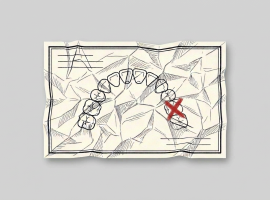
Referral Miscommunication Leads to Wrong-Tooth Extraction
This OMS case study examines a wrong-tooth extraction and the critical role of accurate referrals, informed consent, and treatment verification.

All-on-4 Implant Procedure Leads to Malpractice Claim Against OMS
Explore an OMS malpractice case study involving an All-on-4 implant procedure, surgical complications, clinical judgment, informed consent, and risk management lessons for implant dentistry.

Coding and Consent Issues Result in OMS Malpractice Lawsuit
Learn how upcoding disputes and informed consent gaps can lead to OMS malpractice claims, patient distrust, and legal action.
This document does not constitute legal or medical advice and should not be construed as rules or establishing a standard of care. Because the facts applicable to your situation may vary, or the laws applicable in your jurisdiction may differ, please contact your attorney or other professional advisors if you have any questions related to your legal or medical obligations or rights, state or federal laws, contract interpretation, or other legal questions.
MedPro Group is the marketing name used to refer to the insurance operations of The Medical Protective Company, Princeton Insurance Company, PLICO, Inc. and MedPro RRG Risk Retention Group. All insurance products are underwritten and administered by these and other Berkshire Hathaway affiliates, including National Fire & Marine Insurance Company. Product availability is based upon business and/or regulatory approval and/or may differ among companies.
© MedPro Group Inc. All rights reserved.