Death Following Extraction on Coumadinized Patient

Case Study

Marc Leffler, DDS, Esq.
July 28, 2025

Reading time: 8 minutes
Background

An experienced oral and maxillofacial surgeon (we’ll call him Dr. A) on the verge of retirement from practice was greeted as he entered his office one morning by a process server who handed him a Summons and Complaint — it alleged that he caused the wrongful death of one of his patients, but it had no further details. At first glance, the oral surgeon had vague recall of the patient whose estate filed the suit, but he did not remember any problems with the patient’s treatment which was over a year earlier.

He immediately pulled the patient’s chart – all handwritten – to review it, in advance of getting in touch with his dental malpractice carrier. He was soon contacted by the assigned attorney representing him, and they agreed to meet the following day, as strict time limits existed regarding when a response on behalf of the oral surgeon needed to be filed.

The oral surgeon’s attorney contacted the attorney for the plaintiff to try to understand the underlying circumstances. The plaintiff’s attorney conveyed back that this was a simple case: Dr. A had extracted the patient’s tooth, which led to a significant post-operative bleeding event on the day of extraction, which caused the need for emergency transport to a local hospital, where the patient (age 77) died. The plaintiff’s attorney suggested a quick settlement to save the family a stressful legal process. As would later be learned, those reported case facts were all true, but critical events – which would guide the entirety of the litigation and its resolution – were left out of the description.

Treatment Background

Dr. A and his attorney went through the dental chart together to work through the course of treatment. The patient initially presented, on referral from a general dentist, for evaluation of a non-restorable tooth. Then, the patient said that he was unable to understand the questions on the medical history form, so the oral surgeon, instead, verbally discussed with his new patient any existing medical conditions: the patient disclosed that he was taking Coumadin due to a history of a “blood clot” (deep vein thrombosis), and Toprol for hypertension. Dr. A simply noted “Coumadin and HTN” in the chart for medical history, and called the patient’s physician after determining that the patient needed an extraction; the physician said a subsequent dental appointment should be scheduled a week later rather than treating that day so that the physician could see and evaluate the patient.

Unbeknownst to the oral surgeon, the physician then told his patient to stop taking Coumadin for 4 days prior to that upcoming dental appointment and to obtain a blood test the day prior to it. The patient did exactly that, and his physician then advised him to tell Dr. A that he may proceed with the planned procedure, and that the patient should re-start his Coumadin 2 days after the extraction. The patient reported to Dr. A only that his physician had told him that he may proceed, but he did not mention, nor was he asked about, Coumadin stoppage and testing. All went forward without complication, with Dr. A having never again communicated with the physician.

The patient next appeared nearly a year later for what would be his final visit, complaining of a loose, annoying upper first molar. Radiographic and clinical examination demonstrated a periodontally hopeless tooth, so the oral surgeon, after calling the patient’s general dentist, suggested extraction and the patient agreed. Dr. A asked the patient how his health was, and he responded – according to Dr. A – that he was doing well, but his blood pressure medication had been changed to better control it. That was the entirety of the conversation, with the issue of Coumadin never mentioned by doctor or patient, although the subsequent medical records clearly revealed that he continued to take Coumadin as of that time.

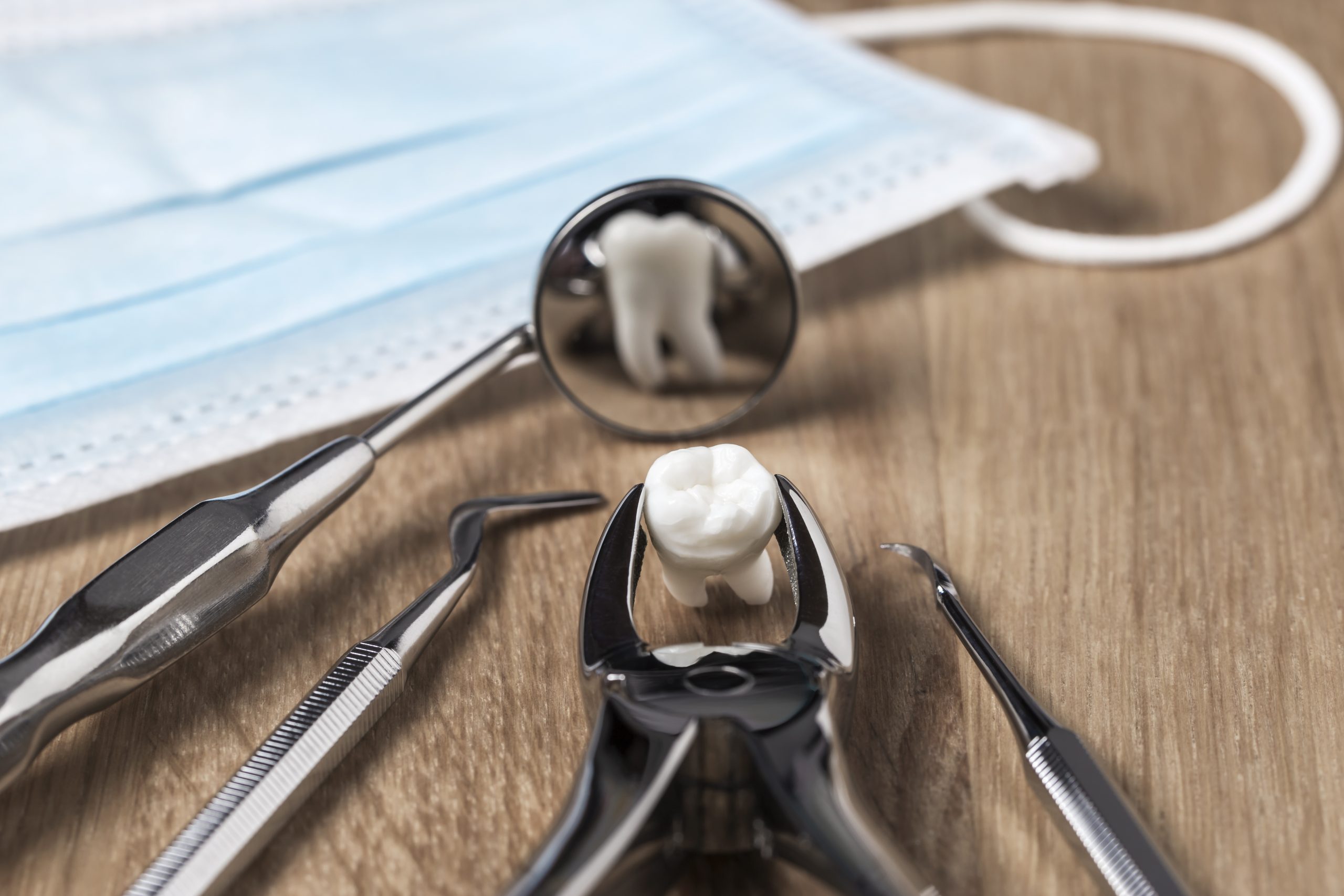
Dr. A routinely extracted tooth #14 and debrided the associated granulation tissue. He applied gauze pressure to the site and good hemostasis was achieved. The patient was discharged home with a packet of extra gauze, and instructions to place additional gauze on the site as needed. The patient’s son, who knew his father was going to the oral surgeon that day, was unable to reach his father that evening, so he drove to his father’s house, to find him conscious, but lying on the floor with blood seeping out of his mouth. An ambulance was called to transport the patient to a local hospital.

At the hospital, the patient was admitted and transfused. Laboratory values showed that the patient had an elevated INR, as would be expected in a Coumadinized patient. A hematologist managed the patient’s anti-coagulation and was able to medically stabilize him within a fairly short time. However, the laboratory studies also, unfortunately, revealed that the patient had an advanced, aggressive form of leukemia, which had not previously been diagnosed. After a work-up and a discussion of treatment options, the patient agreed to start a course of chemotherapy, but he stopped it several days later due to side effects that he found intolerable. Palliative therapy was provided at the hospital, but he soon passed away.

Legal Steps Taken

Once defense counsel obtained all relevant medical records and had experts review them, it was apparent that Dr. A was negligent in failing to take an adequate medical history at the subject extraction visit — so as to have ignored questioning the patient as to whether he was still taking Coumadin, thereby leading to the bleeding event which hospitalized him. But, it was equally clear that it was the entirely unrelated leukemia which caused the patient’s death.

Defense counsel contacted the plaintiff’s attorney, asking for discontinuance of the action because there was no good faith basis to maintain a wrongful death claim. Plaintiff’s counsel argued that it was the oral surgeon’s negligence which put him in the hospital due to uncontrolled bleeding, but the oral surgeon’s attorney reminded him that the only claim was for wrongful death, which was not caused by the defendant, and that the statute of limitations had expired as to any potential bleeding-related claim, thereby precluding its addition at that point. Ultimately, the plaintiff’s attorney relented, and discontinued the case.

However, the estate executor and plaintiff – the patient’s son – was upset that Dr. A was not held accountable for his negligent actions, so he filed a disciplinary complaint with the State. Disciplinary bodies, unlike courts in malpractice litigation, do not consider what result came of a dentist’s claimed improper actions, but only whether those actions constituted professional (i.e. appropriate) or unprofessional conduct — the latter of which is sanctionable. In this case, the disciplinary agency determined that Dr. A had acted improperly with regard to his record-keeping, specifically relating to his taking and recording of the patient’s medical history at the extraction visit. The oral surgeon was given a stayed suspension and a fine, and was required to take continuing education classes in the subjects of history taking and dental charting during his next license renewal cycle.

Takeaways

Beginning with a legal issue, this case demonstrates the importance of immediate reporting to the malpractice carrier, so that counsel may be immediately assigned — not only for the purpose of filing timely response papers, but to allow counsel to evaluate the lawsuit’s pleadings to assess what the claims specifically are. Here, defense counsel was able to determine that the sole claim involved a wrongful causing of death, so that the review of the oral surgeon’s chart and the subsequent medical records could be focused toward assessment and defense of the pending legal claims. Yes, this patient died after dental treatment – albeit well after that treatment, a fact not initially disclosed by plaintiff’s attorney – but it turned out to be unrelated to the defendant’s care. For a valid claim in dental malpractice, there must be negligent treatment which directly causes the injuries claimed.

A common theme explored in legal case studies is the importance of proper record-keeping, which simply cannot be emphasized enough. In this case, even if Dr. A did appropriately discuss medical history with his patient, he did not record having done so. Therefore, a reasonable inference may be drawn, including by a jury, that what was not recorded did not happen. While that issue did not play out in this malpractice case scenario, it was the focus of the discipline levied against the oral surgeon.

Dental providers are well served to present their patients with printed medical history forms, which are then supplemented through a back-and-forth discussion, so nothing of relevance is omitted; if patients, as here, are unable to complete such forms on their own, then a thorough reading through with the patient is in order. Simply asking a patient, “Are you in good health?”, as is done with surprising frequency, leaves it to the patient to evaluate and report what conditions might be significant. Furthermore, a patient’s failure to disclose on a written form carries far more defense weight before a jury than conflicting stories about what was or was not said. Similarly, if physician consultations are requested, a written response from the physician, or minimally, a contemporaneously documented conversation between dentist/oral surgeon and physician will eliminate issues associated with gaps in patient recall and/or which may confuse a patient.

While the purpose of this case study is not to dictate what actions practitioners should or should not take in given situations, it is worth pointing out that health conditions which might quite reasonably affect dental treatment outcomes should be given due consideration, and that can only happen through careful taking and review of medical histories.

Finally, this case demonstrates the value of open communication and a strong professional relationship between oral surgeon and defense counsel familiar with the subject matters at hand.

Note that this case presentation includes circumstances from several different closed cases, in order to demonstrate certain legal and risk management principles, and that identifying facts and personal characteristics were modified to protect identities. The content within is not the original work of MedPro Group but has been published with consent of the author. Nothing contained in this article should be construed as legal, medical, or dental advice. Because the facts applicable to your situation may vary, or the laws applicable in your jurisdiction may differ, please contact your personal or business attorney or other professional advisors if you have any questions related to your legal or medical obligations or rights, state or federal laws, contract interpretation, or other legal questions.

			WP_Query Object
(
    [query] => Array
        (
            [post_type] => post
            [showposts] => 3
            [post__not_in] => Array
                (
                    [0] => 4307
                )

            [post_status] => publish
            [has_password] => 
            [cat] => 1365
        )

    [query_vars] => Array
        (
            [post_type] => post
            [showposts] => 3
            [post__not_in] => Array
                (
                    [0] => 4307
                )

            [post_status] => publish
            [has_password] => 
            [cat] => 1365
            [error] => 
            [m] => 
            [p] => 0
            [post_parent] => 
            [subpost] => 
            [subpost_id] => 
            [attachment] => 
            [attachment_id] => 0
            [name] => 
            [pagename] => 
            [page_id] => 0
            [second] => 
            [minute] => 
            [hour] => 
            [day] => 0
            [monthnum] => 0
            [year] => 0
            [w] => 0
            [category_name] => risk-tips
            [tag] => 
            [tag_id] => 
            [author] => 
            [author_name] => 
            [feed] => 
            [tb] => 
            [paged] => 0
            [meta_key] => 
            [meta_value] => 
            [preview] => 
            [s] => 
            [sentence] => 
            [title] => 
            [fields] => all
            [menu_order] => 
            [embed] => 
            [category__in] => Array
                (
                )

            [category__not_in] => Array
                (
                )

            [category__and] => Array
                (
                )

            [post__in] => Array
                (
                )

            [post_name__in] => Array
                (
                )

            [tag__in] => Array
                (
                )

            [tag__not_in] => Array
                (
                )

            [tag__and] => Array
                (
                )

            [tag_slug__in] => Array
                (
                )

            [tag_slug__and] => Array
                (
                )

            [post_parent__in] => Array
                (
                )

            [post_parent__not_in] => Array
                (
                )

            [author__in] => Array
                (
                )

            [author__not_in] => Array
                (
                )

            [search_columns] => Array
                (
                )

            [ignore_sticky_posts] => 
            [suppress_filters] => 
            [cache_results] => 1
            [update_post_term_cache] => 1
            [update_menu_item_cache] => 
            [lazy_load_term_meta] => 1
            [update_post_meta_cache] => 1
            [posts_per_page] => 3
            [nopaging] => 
            [comments_per_page] => 50
            [no_found_rows] => 
            [order] => DESC
        )

    [tax_query] => WP_Tax_Query Object
        (
            [queries] => Array
                (
                    [0] => Array
                        (
                            [taxonomy] => category
                            [terms] => Array
                                (
                                    [0] => 1365
                                )

                            [field] => term_id
                            [operator] => IN
                            [include_children] => 1
                        )

                )

            [relation] => AND
            [table_aliases:protected] => Array
                (
                    [0] => wp_4_term_relationships
                )

            [queried_terms] => Array
                (
                    [category] => Array
                        (
                            [terms] => Array
                                (
                                    [0] => 1365
                                )

                            [field] => term_id
                        )

                )

            [primary_table] => wp_4_posts
            [primary_id_column] => ID
        )

    [meta_query] => WP_Meta_Query Object
        (
            [queries] => Array
                (
                )

            [relation] => 
            [meta_table] => 
            [meta_id_column] => 
            [primary_table] => 
            [primary_id_column] => 
            [table_aliases:protected] => Array
                (
                )

            [clauses:protected] => Array
                (
                )

            [has_or_relation:protected] => 
        )

    [date_query] => 
    [request] => SELECT SQL_CALC_FOUND_ROWS  wp_4_posts.ID
					 FROM wp_4_posts  LEFT JOIN wp_4_term_relationships ON (wp_4_posts.ID = wp_4_term_relationships.object_id)
					 WHERE 1=1  AND wp_4_posts.ID NOT IN (4307) AND ( 
  wp_4_term_relationships.term_taxonomy_id IN (11)
) AND wp_4_posts.post_password = '' AND wp_4_posts.post_type = 'post' AND ((wp_4_posts.post_status = 'publish'))
					 GROUP BY wp_4_posts.ID
					 ORDER BY wp_4_posts.post_date DESC
					 LIMIT 0, 3
    [posts] => Array
        (
            [0] => WP_Post Object
                (
                    [ID] => 7943
                    [post_author] => 180159417
                    [post_date] => 2026-04-13 10:28:20
                    [post_date_gmt] => 2026-04-13 14:28:20
                    [post_content] => 


In this case study, a treatment for recurrent mandibular subluxation led to unexpected complications and a malpractice claim centered on informed consent. The case highlights the importance of thoroughly discussing realistic risks before oral and maxillofacial surgery.

Key Concepts

  • Why successful outcomes do not eliminate malpractice risk
  • Benefits of maintaining empathy as an OMS
  • How patient expectations can influence malpractice outcomes

Background Facts

P, a healthy, petite 31-year-old elementary school teacher, presented to Dr. V, the oral and maxillofacial surgeon who had extracted her third molars when she was in college. Within the past 6 months, P had made 5 trips to a local hospital ER due to her mouth locking in an open position (subluxation) after widely yawning (twice) and after taking large bites into food (three times). Each time, the emergency physician was able to readily "relocate" her jaw into her normal occlusion, except that the most recent episode required that she be given an intravenous sedative for the treatment to be accomplished. That last episode led the treating doctor to suggest that she see an oral surgeon to find out whether anything could be done to eliminate the problem.

After hearing the history, Dr. V performed a clinical evaluation, but the problem could not be replicated. A radiographic study revealed that P's left coronoid process was very pronounced and elongated, compared to both the right side and to what Dr. V had seen on many radiographic views of TMJs in other patients in general. Due to the specific anatomic arrangement, Dr. V explained to his patient, using a skull to demonstrate, that when she opened wide, the condylar head would sometimes slip ahead of the coronoid process – likely due to some soft tissue laxity – but it was unable to work itself back into the fossa because the coronoid process was too long to get past. 

Dr. V believed that open joint surgery would be the best approach, with two potential options: (1) "tighten" the soft tissues so that the condyle would be less likely to slip forward; or (2) reduce the height of the coronoid process – by way of a procedure known as a coronoidectomy – so that if the jaw did slip forward, it would easily be able to retreat into the fossa. When asked his opinion, Dr. V suggested the coronoidectomy because it would be a lasting solution over time, regardless of how lax the intra-joint soft tissues might become.

P was inclined to proceed that way but wanted to think about it after discussing the risks and concerns more deeply. Dr. V and P did just that. He initially talked about the surgical entry. While an intraoral approach was preferred for a variety of reasons, most significantly a reduced risk of nerve injury, he was concerned about limited access because of her very small stature. So, he would plan to enter extraorally, just in front of the ear. When P followed up regarding the concern for nerves, Dr. V simply stated that there were a number of nerves in the area which are often stretched in the surgical process but generally recover quickly and that, "rarely," the effects can be more longstanding if the nerve itself is "cut into to any significant extent." Dr. V gave P a copy of a "TMJ surgery consent form," which discussed the nerve risks almost verbatim, as well as various other concerns such as infection, delayed healing, scarring, bleeding and pain.

After a month of consideration, P called Dr. V to tell him that she wanted to go forward. He asked her to come to the office to discuss scheduling and other surgery details. P brought her signed consent form with her, and surgery was planned for three weeks later.  

P had her procedure done under general anesthesia, in an ambulatory surgery unit. Dr. V removed what he described as a large portion of the coronoid process, and flattened the entire anterior part of the complex, so that the condyle was able to move freely. At her first post-operative office appointment, P's clearly visible complaint was that she could not close her left eye; Dr. V explained that "this is what we went over beforehand", but P became upset because she had not expected such a significant and unaesthetic result, based upon Dr. V's very casual and downplayed description prior to surgery. Dr. V told P to wait for a while, because all was likely to return to normal. It never did.

Legal Action

Although P's TMJ subluxation was no longer a problem, she was emotionally distressed about how her students stared at her eye and about how her social life was adversely impacted, to say nothing of the need for her to use eye drops daily and having a constant sense of dryness. She worked with a mental health therapist and then retained an attorney to look into and potentially file a lawsuit against Dr. V, the latter of which did come to pass.

As the case progressed through discovery, both P and Dr. V provided deposition testimony. Questions to both of them addressed their respective views of the informed consent process. Beyond that, Dr. V discussed his surgical technique, which P's attorney would later admit to the trial jury was "textbook." During trial, even P's expert oral surgeon could not point to any meaningful criticisms of Dr. V's performing of the surgery. But the issue of informed consent was another story altogether.

The focus of trial regarding the claim of lack of informed consent honed in on the specific language used by Dr. V in his back-and-forth discussion with P, and on the signed consent form itself. P told the jury that she would never have gone through this surgery had Dr. V fully disclosed the risk of what actually happened to her. She called it a "soft sell," meaning that, while the subject of some vague nerve injury was raised, the details of it were not, and the likelihood of it happening was made to sound minimal, almost as a throwaway.

Shortly after the jury was sent to deliberate, its members sent a note to the judge that they had determined the issue of liability (which would later be revealed as no negligence on the part of Dr. V), but they wanted to look at the signed consent form and hear read-backs of the testimony from P and Dr. V regarding the risks explained. The jury ultimately concluded that Dr. V did not adequately warn P of the realistic risk of a motor nerve injury, nor the ramifications if it did happen. An award was given to compensate P for her emotional injuries – as corroborated by her therapist – as well as the physical injuries in and around her eye.  

Takeaways

As this case study illustrates, a plaintiff will be successful and able to receive a monetary award by proving, to a jury's satisfaction, any one (or more) of the stated claims. Here, even though the jury found that Dr. V had met the standard of care with regard to surgical technique, his patient was still successful in her case of malpractice against him, due to his failure to adequately inform P before she consented to go forward with surgery. Informed consent is best not viewed as a mere afterthought, but rather an integral aspect of care with at least legal importance equal to that of the procedure. It warrants thoroughness and transparency.

Far from unusual is for plaintiffs to make case claims that they were negatively impacted to the extent that their mental health suffered. Those allegations are often minimized or even dismissed by judges, for lack of support. But here, P's assertions in that regard were backed up by a mental health therapist. That same concept holds true for all claims in malpractice cases. A plaintiff must present actual support, often times in the way of expert corroboration, to even be allowed to be considered by juries, to say nothing about getting compensation from those juries.

An issue raised in this case was that of the various treatment options available to oral surgeons. Here, Dr. V thoroughly considered those options and reasoned his way to a conclusion that guided his entire approach. While his decision was clearly a judgment call, a solid risk-protective approach taken by Dr. V in this regard was that he undertook a weighing process founded in scientific bases. Judgment calls happen regularly in practice, so they can be expected to be questioned in litigation scenarios. But Monday-morning quarterbacking is best overcome by having had a thoughtful process from the start, so the choice can be justified to a jury.

Finally, as was later described, Dr. V's comment to P when she presented post-op with a facial palsy – that "this is what we went over beforehand" – was not received well by his patient. Whether Dr. V demonstrated a sense of empathy at the time or not cannot be definitively concluded because of its subjective nature, but the underlying point is significant: patients expect their doctors to be caring, interested, and empathetic. Retrospective assessments, to the extent they are reliable, show that patients who feel cared-for, closely followed, and not cast aside by their doctors are less likely to sue them, with all else being equal. Patient care is why everyone signed on to be a part of this profession.

Summary of Takeaways

  • Even when TMJ surgery is performed appropriately, inadequate informed consent can result in malpractice liability if realistic risks are not clearly communicated. 
  • Minimizing or vaguely describing potential complications can lead to unmet patient expectations. 
  • OMS can reduce risk by maintaining clear, empathetic communication before and after surgery.
[post_title] => OMS “Soft Sells” Risks of TMJ Surgery for A Locked Open Mandible [post_excerpt] => [post_status] => publish [comment_status] => open [ping_status] => open [post_password] => [post_name] => oms-soft-sells-risks-of-tmj-surgery-for-a-locked-open-mandible [to_ping] => [pinged] => [post_modified] => 2026-04-24 12:58:09 [post_modified_gmt] => 2026-04-24 16:58:09 [post_content_filtered] => [post_parent] => 0 [guid] => https://oms.medprodental.com/?p=7943 [menu_order] => 0 [post_type] => post [post_mime_type] => [comment_count] => 0 [filter] => raw ) [1] => WP_Post Object ( [ID] => 7898 [post_author] => 180159417 [post_date] => 2026-03-04 06:30:26 [post_date_gmt] => 2026-03-04 11:30:26 [post_content] =>

In this case study, oral and maxillofacial surgeons (OMS) will examine how a documentation error and failure to clinically verify a biopsy site led to wrong site oncologic surgery and malpractice claims. The case highlights the importance of obtaining clinical clarity before procedures.

Key Concepts

  • Preventing wrong-site surgery through pre-procedure precautions
  • Vicarious liability for documentation errors
  • Pure consent to settle clauses in malpractice policies

Background Facts

T, a 71-year-old man, was a retired carpenter, with a history of well-controlled hypertension and chronic, episodic sinusitis, and having smoked at various times in his life, as much as a pack of cigarettes a day. He visited his dentist, Dr. D, at irregular intervals and never wanted to establish a big-picture treatment plan. At his most recent visit, Dr. D noted a course, irregular white area at the buccal mucogingival junction around teeth #29-31. Not feeling comfortable making a provisional diagnosis, Dr. D referred T to a periodontist, Dr. O, to evaluate the area and treat as needed. Dr. O performed an incisional biopsy of the area and sent it to an oral pathologist, Dr. H, for histopathological assessment. The lesion was read out provisionally as atypical epithelial proliferation, but Dr. H asked for a larger sample to be able to make a more definitive diagnosis.

Dr. O took a second specimen from an immediately adjacent site. Due to a clerical error, Dr. O entered into the chart that this specimen had been taken from the "lower left buccal gingiva," with her dental assistant repeating that error on the pathology request form that was forwarded to Dr. H with the tissue. After microscopically examining the specimen, Dr. H diagnosed it definitively. The report from Dr. H to Dr. O read "squamous cell carcinoma, moderately-to-well differentiated, lower left buccal gingiva," the latter aspect having been copied by Dr. H, exactly from the requisition provided by Dr. O's office with the most recent submission.

Upon seeing the words "squamous cell carcinoma," Dr. O immediately referred T to a double-degree oral and maxillofacial surgeon, Dr. M, who had head-and-neck surgery fellowship training, for evaluation and treatment, giving T a copy of the biopsy report to take with him. Dr. M reviewed Dr. H's report, examined T, noting a small lesion on the buccal aspect of teeth #30-31, and explained to T that he would need a PET scan to determine whether there had been any spread. Presuming no such spread, Dr. M advised T that the lesion could be successfully treated by surgery alone, specifically a marginal mandibulectomy and a limited neck dissection. The lesion had not spread, per the PET scan and other modalities, so the stated plan would go forward. T agreed and surgery was scheduled at a regional medical center.

On the day of surgery, T waited in a pre-surgery room, where his medical history was reviewed and identification was checked. A consent form stating the procedure to be "removal of portion of lower jaw, and neck dissection" was signed by T and witnessed by a nurse. Dr. M said a brief "hello" to T before changing into scrubs and entering the operating room, where T was already on the table. Dr. M asked the anesthesiologist to proceed.  

Dr. M had taped Dr. H's biopsy report to the OR wall, read it again, and prepared to make an extraoral left submandibular incision, through which he would both remove a mandibular segment and perform the limited neck dissection. Technically, the procedure went forward uneventfully, with T then transferred to the post-anesthesia care unit. T's wife was brought in to see her husband while Dr. M was still there, dictating his operative note. She was aghast to see that surgery had been performed on T's left side, when she knew that the cancer was on the right. When she confronted Dr. M on the spot, he said, "here's the biopsy report, read it for yourself."  

Shortly after T's initial surgical recovery, another surgeon treated T, this time correctly operating on the right side of T's face and neck. T suffered emotionally, to the extent that he sought and obtained psychological counseling, but he was never able to comfortably eat or drink, or otherwise normally function orally again. He required and received reconstruction bilaterally, but he always found it to be very compromised and esthetically unacceptable.

Legal Action

T retained a seasoned attorney, who collected all records and obtained opinions from a general dentist (like Dr. D), a periodontist (like Dr. O), an oral pathologist (like Dr. H), and an OMS (like Dr. M). The general dentist saw no liability on Dr. D's part, as he had immediately made an appropriate referral. The oral pathologist similarly found no liability as to Dr. H, reasoning that oral pathologists in biopsy situations do not assess the patient clinically. They simply diagnose what they see microscopically, which he did accurately, and report the findings regarding the site that was conveyed on the requisition it had come from.  

The conclusions as to Drs. O and M were quite the different. The expert periodontist stated his view of Dr. O's negligence succinctly: Dr. O's recording error which incorrectly stated the location of the lesion to be examined was inexcusable, and it served to set the entire cascade of events into action, resulting in wrong-side surgery having been done. The oral surgery expert was deeply critical of Dr. M, claiming that he failed to clinically correlate the location findings on a biopsy report with the patient's actual condition, and then compounded the situation by being unwilling to address his error, thereby violating his duties, both surgically and ethically. In short, said this expert, Dr. M failed to do the most basic tasks, namely double checking the intended surgical site before performing irreversible, life-altering treatments.

Substantial settlement amounts were paid to T on behalf of both Dr. O and Dr. M. Additionally, Dr. M was sanctioned by his State Board.

Takeaways

Wrong-site treatment, including surgery – whether, as here, relating to the side of the mandible to be removed, or extracting a first bicuspid instead of an orthodontically planned-for second bicuspid, or endodontically treating a healthy lower molar instead of the diseased tooth next to it – has permanent effects, which are virtually always preventable. Pre-procedure techniques can be, and routinely are, employed that will stop this type of error from ever taking place, such as taking a time out for confirmation, marking the side/site of surgery, having two people independently confirm what is to be done, clinically correlating a result document (such as a biopsy report) with an actual finding, and having an open, no-consequences policy that encourages office staff to voice any concerns before a potential untoward event begins. The old "a stitch in time" adage is never more applicable than in pre-procedure risk protection.

One of the most frequent case types now seen in malpractice claims is a practitioner performing treatment where it was not intended to be, and the trend appears to be growing. While the reasons for that are simply theories, a common-sense approach is that such events might well be driven by a focus on the number of patients seen and procedures performed. In reality, the amount of time needed before a procedure to assure correct patient, correct site, correct procedure is nominal in comparison to the amount of time that most procedures take. But even if a practitioner or an office is measurably slowed down to achieve those assurances, obligations to patient safety warrant those delays.

This case highlights the consideration of responding to patients and their family members when results are not as planned or expected, when complications come to pass, or, as here, when errors are immediately obvious. It would not likely have changed the ultimate course of legal events had Dr. M responded to T's wife differently, because the negligence was so clear and significant, but it might have reduced the likelihood of a Board complaint being levied against him. Evidence to support that theory lies with the fact that no Board complaint was filed against Dr. O.  

The pathology request form sent to Dr. H with the second specimen taken by Dr. O was completed by Dr. O's dental assistant, who wrote the requisition form. By way of a concept known as vicarious liability, what the dental assistant wrote is the functional equivalent of Dr. O having written it herself. The assistant's error, whether copied from Dr. O's own transcription error or not, becomes Dr. O's error as well. All that is delegated comes back to the delegator, so double-checking of even such a seemingly unimportant task is critical for liability protection and for patient protection.

As a background fact, both Dr. O and Dr. M had professional liability ("dental malpractice") policies with "pure consent-to-settle" provisions, meaning that no settlement could have been reached without their agreement to do so. Such a provision means that a practitioner can demand that a lawsuit brought against them be tried in court before a jury, regardless of how strong the evidence of wrongdoing might be. For every case, practitioners are counseled by their attorneys regarding the pros and cons of settlement versus trial, with the potential implications of both fully set out on the table.  

Finally, we note that, simply for purposes of brevity, some details, which were not relevant to the risk management issues discussed, were omitted. This is particularly the case regarding the pre-surgical work-up phase of care, secondary criticisms addressed by the experts, and the documentary and testimonial evidence before the State Board. Their absence should not be construed as necessary but missing pieces.

Summary of Takeaways

  • Wrong site surgery remains a leading and largely preventable source of malpractice claims.
  • OMS are accountable for errors made by delegated staff, even when those errors were unintentional.
  • Simple confirmation practices before irreversible procedures can prevent patient harm and legal consequences.
[post_title] => Failure to Verify Leads to Irreversible Surgical Error [post_excerpt] => [post_status] => publish [comment_status] => open [ping_status] => open [post_password] => [post_name] => missed-verification-leads-to-irreversible-surgical-error [to_ping] => [pinged] => [post_modified] => 2026-03-30 09:31:21 [post_modified_gmt] => 2026-03-30 13:31:21 [post_content_filtered] => [post_parent] => 0 [guid] => https://oms.medprodental.com/?p=7898 [menu_order] => 0 [post_type] => post [post_mime_type] => [comment_count] => 0 [filter] => raw ) [2] => WP_Post Object ( [ID] => 7857 [post_author] => 180159417 [post_date] => 2026-01-28 08:40:20 [post_date_gmt] => 2026-01-28 13:40:20 [post_content] =>

This real life case study reveals how limited 2D imaging can lead to missed anatomic details and patient complications. See how incorporating 3D imaging may help strengthen diagnostic accuracy and reduce malpractice risk in your oral and maxillofacial surgery practice.

Key Concepts

  • How imaging choices influence malpractice risk
  • Why expert opinions on imaging often differ
  • Key differences between 2D and 3D imaging

Background facts

Dr. P practiced restorative dentistry in a suburban community since her completion of dental school and a general practice residency. During her formal training and after, she engaged in didactic and clinical coursework involving implant placement and restoration, and regularly recommended and employed dental implants in her treatment plans. That was the case when a new area resident, O, a healthy man in his 40s, presented for general care and consideration for replacing missing tooth #30, which was extracted years ago following a trauma-induced fracture.

O's mouth was in generally good repair, as he practiced good home hygiene and had been a regular dental patient for his entire adult life. Dr. P discussed the replacement options of a 3-unit fixed bridge and an endosseous implant, upon which a single crown would be placed. After taking and viewing a panoramic radiograph, Dr. P advised O that he had "plenty of bone" to support an implant, and she suggested that approach. The costs were similar, so O opted for the implant plan. Dr. P advised O of the usual risks of implant surgery, including a nerve injury which could even be permanent in "rare" situations. O agreed to go forward and set up an appointment within the next few weeks.

At the surgical visit, a chairside assistant presented O with a document entitled Implant Consent Form, telling O that this was exactly what Dr. P had discussed with him. O quickly perused the form and signed it. Based upon measurements she made on the panoramic film, Dr. P determined there to be 14.5 mm of mandibular bone superior to the inferior alveolar canal (IAC), so she planned for and placed a 13 mm fixture. Upon elevating a gingival flap, Dr. P noticed that the lingual height of bone was "a good deal" higher than on the buccal aspect. Other than O briefly wincing toward the end of the preparation phase, all went smoothly, with the implant covered with soft tissue and sutured. A post-placement periapical radiograph showed the implant in very close approximation to the IAC, but Dr. P saw "daylight," so she was not concerned.

One week later, at the suture removal visit, O complained of "pins and needles" and "numbness" on the right side of his lower lip and chin; Dr. P stated that she remained "unconcerned", explaining that this is common and all should be back to normal over the next weeks or months. O returned for crown placement 5 months after implant surgery, still with the same "annoying sensations". Dr. P was surprised that the situation had not normalized, but she continued to reassure O of a return to normal. That never came.

Legal action

O always found the tingling and numbness to be uncomfortable, but he never thought to do anything about it until he met up with a college classmate of his, now an attorney, at an alumni event. The classmate did not practice law where O now lived, but suggested that he consult with an attorney he knew who did "a lot of malpractice work". O met with that lawyer, who gathered all of Dr. P's records and sent O to a local neurologist to assess the extent of the injury: the neurologist confirmed that O's mandibular nerve was, in fact, injured and did not conceive of any improvement, now nearly two years after the surgical event.

O's attorney contacted an experienced dentist whom he knew, who had testified in dental malpractice cases in the past, and who, like Dr. P, regularly placed and restored implants, seeking to retain that dentist as an expert on behalf of O. Following a review of the records, the expert reported back to the attorney that, in his opinion, Dr. P had deviated from the standard of care, which in the expert's view required the use of CBCT radiography in order to accurately determine available bone for implant placement. The expert cited specifically to Dr. P's intraoperative finding of a sloped mandibular crest, which could not have been determined on the 2-D panoramic but would have been seen on a 3-D CBCT, had one been taken. The expert added to that opinion the concept that, once Dr. P noted that lingual-to-buccal slope, she should have immediately stepped back and reconsidered whether the planned-for 13 mm implant was appropriate, which it ended up not being, as the measurement was based upon the highest point of the crest, rather than lower points on that slope, which were closer to the IAC.

The attorney quickly filed suit against Dr. P, as the statute of limitations was approaching. Dr. P contacted her professional liability carrier, which assigned defense counsel to Dr. P. O's attorney voluntarily shared his expert's report with defense counsel, hoping to demonstrate a strong basis for an early settlement. But, defense counsel retained its own expert, who opined that the standard of care allowed for 2-D panoramic films for the purpose of implant planning, although acknowledging a deep split within the dental profession, with some dentists and organized dental groups asserting that (exactly because of anatomic situations as Dr. P found) 3-D studies were required prior to posterior mandibular implant placement, with other dentists and dental groups agreeing with this defense expert's stance. In part, the latter view is supported by the statistical fact that, according to recent assessments, only 29% of U.S. general/restorative dentists have on-site CBCT availability, with less than 2/3 of dental specialists having such access.

Defense counsel recognized that a motion for summary judgment – one seeking dismissal of the case without trial – would not be fruitful because such a motion can only be successful when, among other things, there is no legitimate difference between opposing expert opinions. Therefore, defense counsel thoroughly presented Dr. P with her options: go to trial and ask a jury to determine whether she had run afoul of the standard of care, allowing them to award money to compensate O for his injuries if they determined that she did not meet the standard of care, and if that was causative of his injuries; or trying to reach a pre-trial settlement, presuming that the carrier agreed with that prospect, which it did.

Dr. P frankly said to her attorney that, in multiple continuing education classes she had taken, the need for pre-implant CBCT studies was discussed, for the very reasons highlighted in O's treatment; she further acknowledged that she would have to testify to that experience if asked at trial. Dr. P was concerned, so she authorized attempts to resolve the case. Because O's injuries were viewed, even by his own lawyer, as not severe, evidenced in part by O having never sought subsequent evaluations or care other than at the direction of his attorney, a modest settlement was reached.

Takeaways

It is the rule, and not the exception, that experts for plaintiffs and defendants will disagree, and that is also the case for dentists as a whole, outside of the litigation realm. Those disagreements take center stage during dental malpractice trials, with jurors left to determine which of the opposing positions they accept. As Dr. P reasoned here, it is rarely, if ever, simply a coin flip, because a host of factors play into jury determinations, so the pre-trial "prediction calculus" takes into account a common-sense approach as to how lay people will most likely come to their conclusions on matters of science and professional expertise. Sometimes demeanors of the parties and/or experts carry the day; sometimes the bases of expert opinions are determinative; and sometimes, as might play here, particular professional experiences in the dentist's past are of significance. While legitimate (not fabricated) differences of expert conclusions generally preclude dismissal before trial by way of motions, those differences will need to be resolved by a trial jury. There is no getting around that.

This case study briefly touches on the concept of statute of limitations (SOL), so a short description is in order. The SOL is the time following a claimed negligent event (or sometimes the subsequent discovery of that event) within which a plaintiff must file suit, or be forever time-barred. Of course, as with so many issues in the law, there are nuances and issues that can serve to lengthen the allowable timeframe, but they are exceptions, with the statutory SOL generally being the bedrock. The concept of SOL is perhaps the most variable legal issue as between the States – or at least close to the top of the list – but it is a consideration for attorneys (or self-represented plaintiffs) to grapple with, and not something with which dentists need to familiarize themselves.

As the body of this case study references, divergent views exist within dentistry as to what radiographic techniques are "best" for various planned procedures or diagnostic approaches, which in the litigation arena often translates to opinions as to the standard of care. Articles in respected journals present competing ideas. Some take the approach that dentists are in the most ideal position to make patient-based, procedure-based, and circumstance-based decisions as to which radiographic techniques – whether CBCT, panoramic, periapical, etc. – are most appropriate clinically; others are more rigid, asserting, for example, that nearly all invasive dental/oral surgical procedures require CBCT studies in advance. While we do not advocate here in either direction, dentists and oral surgeons ought to be aware of these opposing schools of thought and consider them in decision-making, realizing that jurors might get the final say.

We end on a note about the decision faced by Dr. P. Given that she had a "consent-to-settle" policy, it was her right to refuse any type of settlement, regardless of the input or advice of her counsel or insurer. Had she not had such a policy, that decision would not have been hers to make. This is yet another issue for dentists to consider when choosing a malpractice carrier and policy.

[post_title] => 2D vs. 3D Imaging: What OMS Should Know About Implant Planning [post_excerpt] => [post_status] => publish [comment_status] => open [ping_status] => open [post_password] => [post_name] => 2d-vs-3d-imaging-what-oms-should-know-about-implant-planning [to_ping] => [pinged] => [post_modified] => 2026-04-03 13:18:07 [post_modified_gmt] => 2026-04-03 17:18:07 [post_content_filtered] => [post_parent] => 0 [guid] => https://oms.medprodental.com/?p=7857 [menu_order] => 0 [post_type] => post [post_mime_type] => [comment_count] => 0 [filter] => raw ) ) [post_count] => 3 [current_post] => -1 [before_loop] => 1 [in_the_loop] => [post] => WP_Post Object ( [ID] => 7943 [post_author] => 180159417 [post_date] => 2026-04-13 10:28:20 [post_date_gmt] => 2026-04-13 14:28:20 [post_content] =>

In this case study, a treatment for recurrent mandibular subluxation led to unexpected complications and a malpractice claim centered on informed consent. The case highlights the importance of thoroughly discussing realistic risks before oral and maxillofacial surgery.

Key Concepts

  • Why successful outcomes do not eliminate malpractice risk
  • Benefits of maintaining empathy as an OMS
  • How patient expectations can influence malpractice outcomes

Background Facts

P, a healthy, petite 31-year-old elementary school teacher, presented to Dr. V, the oral and maxillofacial surgeon who had extracted her third molars when she was in college. Within the past 6 months, P had made 5 trips to a local hospital ER due to her mouth locking in an open position (subluxation) after widely yawning (twice) and after taking large bites into food (three times). Each time, the emergency physician was able to readily "relocate" her jaw into her normal occlusion, except that the most recent episode required that she be given an intravenous sedative for the treatment to be accomplished. That last episode led the treating doctor to suggest that she see an oral surgeon to find out whether anything could be done to eliminate the problem.

After hearing the history, Dr. V performed a clinical evaluation, but the problem could not be replicated. A radiographic study revealed that P's left coronoid process was very pronounced and elongated, compared to both the right side and to what Dr. V had seen on many radiographic views of TMJs in other patients in general. Due to the specific anatomic arrangement, Dr. V explained to his patient, using a skull to demonstrate, that when she opened wide, the condylar head would sometimes slip ahead of the coronoid process – likely due to some soft tissue laxity – but it was unable to work itself back into the fossa because the coronoid process was too long to get past. 

Dr. V believed that open joint surgery would be the best approach, with two potential options: (1) "tighten" the soft tissues so that the condyle would be less likely to slip forward; or (2) reduce the height of the coronoid process – by way of a procedure known as a coronoidectomy – so that if the jaw did slip forward, it would easily be able to retreat into the fossa. When asked his opinion, Dr. V suggested the coronoidectomy because it would be a lasting solution over time, regardless of how lax the intra-joint soft tissues might become.

P was inclined to proceed that way but wanted to think about it after discussing the risks and concerns more deeply. Dr. V and P did just that. He initially talked about the surgical entry. While an intraoral approach was preferred for a variety of reasons, most significantly a reduced risk of nerve injury, he was concerned about limited access because of her very small stature. So, he would plan to enter extraorally, just in front of the ear. When P followed up regarding the concern for nerves, Dr. V simply stated that there were a number of nerves in the area which are often stretched in the surgical process but generally recover quickly and that, "rarely," the effects can be more longstanding if the nerve itself is "cut into to any significant extent." Dr. V gave P a copy of a "TMJ surgery consent form," which discussed the nerve risks almost verbatim, as well as various other concerns such as infection, delayed healing, scarring, bleeding and pain.

After a month of consideration, P called Dr. V to tell him that she wanted to go forward. He asked her to come to the office to discuss scheduling and other surgery details. P brought her signed consent form with her, and surgery was planned for three weeks later.  

P had her procedure done under general anesthesia, in an ambulatory surgery unit. Dr. V removed what he described as a large portion of the coronoid process, and flattened the entire anterior part of the complex, so that the condyle was able to move freely. At her first post-operative office appointment, P's clearly visible complaint was that she could not close her left eye; Dr. V explained that "this is what we went over beforehand", but P became upset because she had not expected such a significant and unaesthetic result, based upon Dr. V's very casual and downplayed description prior to surgery. Dr. V told P to wait for a while, because all was likely to return to normal. It never did.

Legal Action

Although P's TMJ subluxation was no longer a problem, she was emotionally distressed about how her students stared at her eye and about how her social life was adversely impacted, to say nothing of the need for her to use eye drops daily and having a constant sense of dryness. She worked with a mental health therapist and then retained an attorney to look into and potentially file a lawsuit against Dr. V, the latter of which did come to pass.

As the case progressed through discovery, both P and Dr. V provided deposition testimony. Questions to both of them addressed their respective views of the informed consent process. Beyond that, Dr. V discussed his surgical technique, which P's attorney would later admit to the trial jury was "textbook." During trial, even P's expert oral surgeon could not point to any meaningful criticisms of Dr. V's performing of the surgery. But the issue of informed consent was another story altogether.

The focus of trial regarding the claim of lack of informed consent honed in on the specific language used by Dr. V in his back-and-forth discussion with P, and on the signed consent form itself. P told the jury that she would never have gone through this surgery had Dr. V fully disclosed the risk of what actually happened to her. She called it a "soft sell," meaning that, while the subject of some vague nerve injury was raised, the details of it were not, and the likelihood of it happening was made to sound minimal, almost as a throwaway.

Shortly after the jury was sent to deliberate, its members sent a note to the judge that they had determined the issue of liability (which would later be revealed as no negligence on the part of Dr. V), but they wanted to look at the signed consent form and hear read-backs of the testimony from P and Dr. V regarding the risks explained. The jury ultimately concluded that Dr. V did not adequately warn P of the realistic risk of a motor nerve injury, nor the ramifications if it did happen. An award was given to compensate P for her emotional injuries – as corroborated by her therapist – as well as the physical injuries in and around her eye.  

Takeaways

As this case study illustrates, a plaintiff will be successful and able to receive a monetary award by proving, to a jury's satisfaction, any one (or more) of the stated claims. Here, even though the jury found that Dr. V had met the standard of care with regard to surgical technique, his patient was still successful in her case of malpractice against him, due to his failure to adequately inform P before she consented to go forward with surgery. Informed consent is best not viewed as a mere afterthought, but rather an integral aspect of care with at least legal importance equal to that of the procedure. It warrants thoroughness and transparency.

Far from unusual is for plaintiffs to make case claims that they were negatively impacted to the extent that their mental health suffered. Those allegations are often minimized or even dismissed by judges, for lack of support. But here, P's assertions in that regard were backed up by a mental health therapist. That same concept holds true for all claims in malpractice cases. A plaintiff must present actual support, often times in the way of expert corroboration, to even be allowed to be considered by juries, to say nothing about getting compensation from those juries.

An issue raised in this case was that of the various treatment options available to oral surgeons. Here, Dr. V thoroughly considered those options and reasoned his way to a conclusion that guided his entire approach. While his decision was clearly a judgment call, a solid risk-protective approach taken by Dr. V in this regard was that he undertook a weighing process founded in scientific bases. Judgment calls happen regularly in practice, so they can be expected to be questioned in litigation scenarios. But Monday-morning quarterbacking is best overcome by having had a thoughtful process from the start, so the choice can be justified to a jury.

Finally, as was later described, Dr. V's comment to P when she presented post-op with a facial palsy – that "this is what we went over beforehand" – was not received well by his patient. Whether Dr. V demonstrated a sense of empathy at the time or not cannot be definitively concluded because of its subjective nature, but the underlying point is significant: patients expect their doctors to be caring, interested, and empathetic. Retrospective assessments, to the extent they are reliable, show that patients who feel cared-for, closely followed, and not cast aside by their doctors are less likely to sue them, with all else being equal. Patient care is why everyone signed on to be a part of this profession.

Summary of Takeaways

  • Even when TMJ surgery is performed appropriately, inadequate informed consent can result in malpractice liability if realistic risks are not clearly communicated. 
  • Minimizing or vaguely describing potential complications can lead to unmet patient expectations. 
  • OMS can reduce risk by maintaining clear, empathetic communication before and after surgery.
[post_title] => OMS “Soft Sells” Risks of TMJ Surgery for A Locked Open Mandible [post_excerpt] => [post_status] => publish [comment_status] => open [ping_status] => open [post_password] => [post_name] => oms-soft-sells-risks-of-tmj-surgery-for-a-locked-open-mandible [to_ping] => [pinged] => [post_modified] => 2026-04-24 12:58:09 [post_modified_gmt] => 2026-04-24 16:58:09 [post_content_filtered] => [post_parent] => 0 [guid] => https://oms.medprodental.com/?p=7943 [menu_order] => 0 [post_type] => post [post_mime_type] => [comment_count] => 0 [filter] => raw ) [comment_count] => 0 [current_comment] => -1 [found_posts] => 57 [max_num_pages] => 19 [max_num_comment_pages] => 0 [is_single] => [is_preview] => [is_page] => [is_archive] => 1 [is_date] => [is_year] => [is_month] => [is_day] => [is_time] => [is_author] => [is_category] => 1 [is_tag] => [is_tax] => [is_search] => [is_feed] => [is_comment_feed] => [is_trackback] => [is_home] => [is_privacy_policy] => [is_404] => [is_embed] => [is_paged] => [is_admin] => [is_attachment] => [is_singular] => [is_robots] => [is_favicon] => [is_posts_page] => [is_post_type_archive] => [query_vars_hash:WP_Query:private] => 6d5370aea10afc2b1f284ef296fe3cf4 [query_vars_changed:WP_Query:private] => [thumbnails_cached] => [allow_query_attachment_by_filename:protected] => [stopwords:WP_Query:private] => [compat_fields:WP_Query:private] => Array ( [0] => query_vars_hash [1] => query_vars_changed ) [compat_methods:WP_Query:private] => Array ( [0] => init_query_flags [1] => parse_tax_query ) [query_cache_key:WP_Query:private] => wp_query:0284d33effdbccebd7354ee03bddc14c )

Additional Risk Tips content

In this case study, a patient files a malpractice claim tied to informed consent, despite a successful surgery. Learn how communication affects risk.

In this case study, wrong site oral surgery leads to malpractice claims. Read the article to learn how pre-procedure safeguards can prevent devastating errors.

A case study showing how 2D imaging in implant planning can miss critical anatomy and increase malpractice risk, highlighting the value of 3D imaging.

This document does not constitute legal or medical advice and should not be construed as rules or establishing a standard of care. Because the facts applicable to your situation may vary, or the laws applicable in your jurisdiction may differ, please contact your attorney or other professional advisors if you have any questions related to your legal or medical obligations or rights, state or federal laws, contract interpretation, or other legal questions.

MedPro Group is the marketing name used to refer to the insurance operations of The Medical Protective Company, Princeton Insurance Company, PLICO, Inc. and MedPro RRG Risk Retention Group. All insurance products are underwritten and administered by these and other Berkshire Hathaway affiliates, including National Fire & Marine Insurance Company. Product availability is based upon business and/or regulatory approval and/or may differ among companies.

© MedPro Group Inc. All rights reserved.