Failure to Verify Leads to Irreversible Surgical Error
Marc Leffler, DDS, Esq.
May 1, 2026
Reading time: 8 minutes
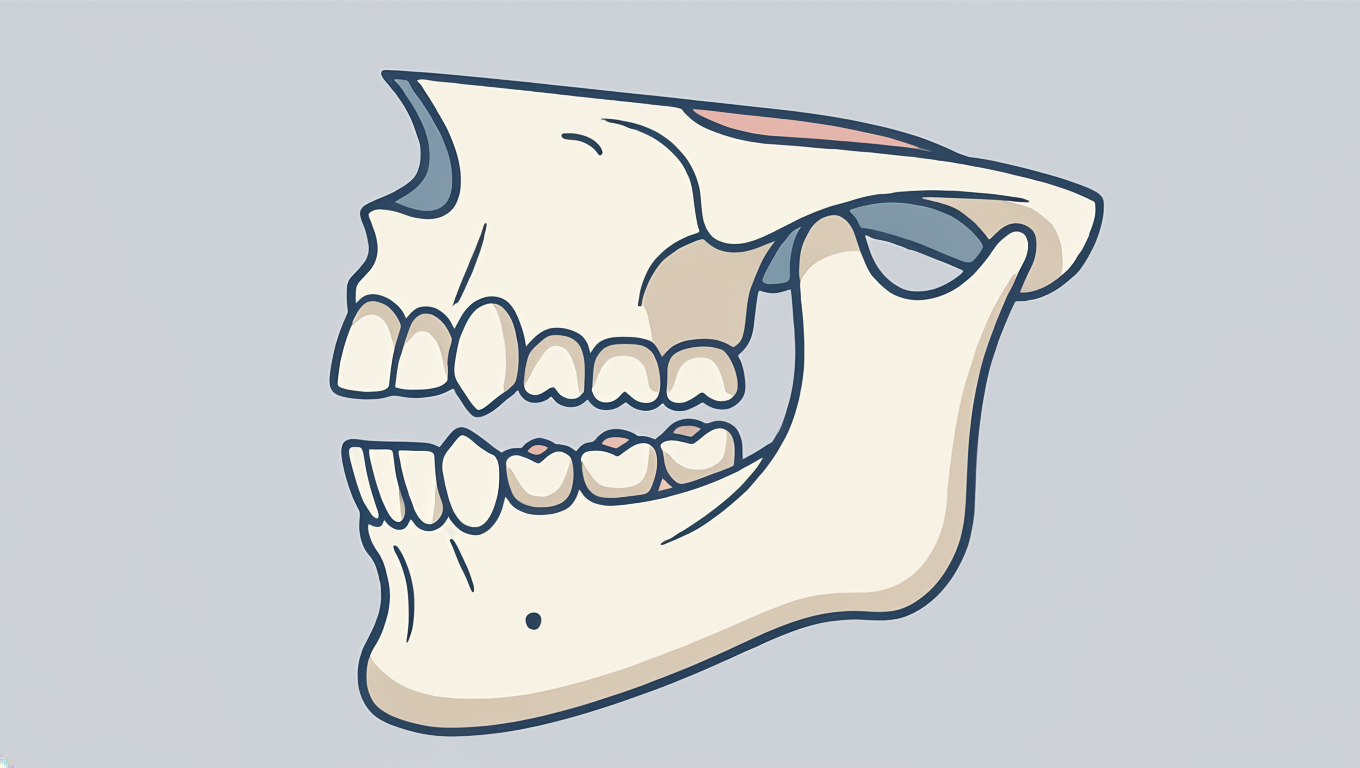
In this case study, oral and maxillofacial surgeons (OMS) will examine how a documentation error and failure to clinically verify a biopsy site led to wrong site oncologic surgery and malpractice claims. The case highlights the importance of obtaining clinical clarity before procedures.
Key Concepts
- Preventing wrong-site surgery through pre-procedure precautions
- Vicarious liability for documentation errors
- Pure consent to settle clauses in malpractice policies
Background Facts
T, a 71-year-old man, was a retired carpenter, with a history of well-controlled hypertension and chronic, episodic sinusitis, and having smoked at various times in his life, as much as a pack of cigarettes a day. He visited his dentist, Dr. D, at irregular intervals and never wanted to establish a big-picture treatment plan. At his most recent visit, Dr. D noted a course, irregular white area at the buccal mucogingival junction around teeth #29-31. Not feeling comfortable making a provisional diagnosis, Dr. D referred T to a periodontist, Dr. O, to evaluate the area and treat as needed. Dr. O performed an incisional biopsy of the area and sent it to an oral pathologist, Dr. H, for histopathological assessment. The lesion was read out provisionally as atypical epithelial proliferation, but Dr. H asked for a larger sample to be able to make a more definitive diagnosis.
Dr. O took a second specimen from an immediately adjacent site. Due to a clerical error, Dr. O entered into the chart that this specimen had been taken from the “lower left buccal gingiva,” with her dental assistant repeating that error on the pathology request form that was forwarded to Dr. H with the tissue. After microscopically examining the specimen, Dr. H diagnosed it definitively. The report from Dr. H to Dr. O read “squamous cell carcinoma, moderately-to-well differentiated, lower left buccal gingiva,” the latter aspect having been copied by Dr. H, exactly from the requisition provided by Dr. O’s office with the most recent submission.
Upon seeing the words “squamous cell carcinoma,” Dr. O immediately referred T to a double-degree oral and maxillofacial surgeon, Dr. M, who had head-and-neck surgery fellowship training, for evaluation and treatment, giving T a copy of the biopsy report to take with him. Dr. M reviewed Dr. H’s report, examined T, noting a small lesion on the buccal aspect of teeth #30-31, and explained to T that he would need a PET scan to determine whether there had been any spread. Presuming no such spread, Dr. M advised T that the lesion could be successfully treated by surgery alone, specifically a marginal mandibulectomy and a limited neck dissection. The lesion had not spread, per the PET scan and other modalities, so the stated plan would go forward. T agreed and surgery was scheduled at a regional medical center.
On the day of surgery, T waited in a pre-surgery room, where his medical history was reviewed and identification was checked. A consent form stating the procedure to be “removal of portion of lower jaw, and neck dissection” was signed by T and witnessed by a nurse. Dr. M said a brief “hello” to T before changing into scrubs and entering the operating room, where T was already on the table. Dr. M asked the anesthesiologist to proceed.
Dr. M had taped Dr. H’s biopsy report to the OR wall, read it again, and prepared to make an extraoral left submandibular incision, through which he would both remove a mandibular segment and perform the limited neck dissection. Technically, the procedure went forward uneventfully, with T then transferred to the post-anesthesia care unit. T’s wife was brought in to see her husband while Dr. M was still there, dictating his operative note. She was aghast to see that surgery had been performed on T’s left side, when she knew that the cancer was on the right. When she confronted Dr. M on the spot, he said, “here’s the biopsy report, read it for yourself.”
Shortly after T’s initial surgical recovery, another surgeon treated T, this time correctly operating on the right side of T’s face and neck. T suffered emotionally, to the extent that he sought and obtained psychological counseling, but he was never able to comfortably eat or drink, or otherwise normally function orally again. He required and received reconstruction bilaterally, but he always found it to be very compromised and esthetically unacceptable.
Legal Action
T retained a seasoned attorney, who collected all records and obtained opinions from a general dentist (like Dr. D), a periodontist (like Dr. O), an oral pathologist (like Dr. H), and an OMS (like Dr. M). The general dentist saw no liability on Dr. D’s part, as he had immediately made an appropriate referral. The oral pathologist similarly found no liability as to Dr. H, reasoning that oral pathologists in biopsy situations do not assess the patient clinically. They simply diagnose what they see microscopically, which he did accurately, and report the findings regarding the site that was conveyed on the requisition it had come from.
The conclusions as to Drs. O and M were quite the different. The expert periodontist stated his view of Dr. O’s negligence succinctly: Dr. O’s recording error which incorrectly stated the location of the lesion to be examined was inexcusable, and it served to set the entire cascade of events into action, resulting in wrong-side surgery having been done. The oral surgery expert was deeply critical of Dr. M, claiming that he failed to clinically correlate the location findings on a biopsy report with the patient’s actual condition, and then compounded the situation by being unwilling to address his error, thereby violating his duties, both surgically and ethically. In short, said this expert, Dr. M failed to do the most basic tasks, namely double checking the intended surgical site before performing irreversible, life-altering treatments.
Substantial settlement amounts were paid to T on behalf of both Dr. O and Dr. M. Additionally, Dr. M was sanctioned by his State Board.
Takeaways
Wrong-site treatment, including surgery – whether, as here, relating to the side of the mandible to be removed, or extracting a first bicuspid instead of an orthodontically planned-for second bicuspid, or endodontically treating a healthy lower molar instead of the diseased tooth next to it – has permanent effects, which are virtually always preventable. Pre-procedure techniques can be, and routinely are, employed that will stop this type of error from ever taking place, such as taking a time out for confirmation, marking the side/site of surgery, having two people independently confirm what is to be done, clinically correlating a result document (such as a biopsy report) with an actual finding, and having an open, no-consequences policy that encourages office staff to voice any concerns before a potential untoward event begins. The old “a stitch in time” adage is never more applicable than in pre-procedure risk protection.
One of the most frequent case types now seen in malpractice claims is a practitioner performing treatment where it was not intended to be, and the trend appears to be growing. While the reasons for that are simply theories, a common-sense approach is that such events might well be driven by a focus on the number of patients seen and procedures performed. In reality, the amount of time needed before a procedure to assure correct patient, correct site, correct procedure is nominal in comparison to the amount of time that most procedures take. But even if a practitioner or an office is measurably slowed down to achieve those assurances, obligations to patient safety warrant those delays.
This case highlights the consideration of responding to patients and their family members when results are not as planned or expected, when complications come to pass, or, as here, when errors are immediately obvious. It would not likely have changed the ultimate course of legal events had Dr. M responded to T’s wife differently, because the negligence was so clear and significant, but it might have reduced the likelihood of a Board complaint being levied against him. Evidence to support that theory lies with the fact that no Board complaint was filed against Dr. O.
The pathology request form sent to Dr. H with the second specimen taken by Dr. O was completed by Dr. O’s dental assistant, who wrote the requisition form. By way of a concept known as vicarious liability, what the dental assistant wrote is the functional equivalent of Dr. O having written it herself. The assistant’s error, whether copied from Dr. O’s own transcription error or not, becomes Dr. O’s error as well. All that is delegated comes back to the delegator, so double-checking of even such a seemingly unimportant task is critical for liability protection and for patient protection.
As a background fact, both Dr. O and Dr. M had professional liability (“dental malpractice”) policies with “pure consent-to-settle” provisions, meaning that no settlement could have been reached without their agreement to do so. Such a provision means that a practitioner can demand that a lawsuit brought against them be tried in court before a jury, regardless of how strong the evidence of wrongdoing might be. For every case, practitioners are counseled by their attorneys regarding the pros and cons of settlement versus trial, with the potential implications of both fully set out on the table.
Finally, we note that, simply for purposes of brevity, some details, which were not relevant to the risk management issues discussed, were omitted. This is particularly the case regarding the pre-surgical work-up phase of care, secondary criticisms addressed by the experts, and the documentary and testimonial evidence before the State Board. Their absence should not be construed as necessary but missing pieces.
Summary of Takeaways
- Wrong site surgery remains a leading and largely preventable source of malpractice claims.
- OMS are accountable for errors made by delegated staff, even when those errors were unintentional.
- Simple confirmation practices before irreversible procedures can prevent patient harm and legal consequences.
Note that this case presentation includes circumstances from several different closed cases, in order to demonstrate certain legal and risk management principles, and that identifying facts and personal characteristics were modified to protect identities. The content within is not the original work of MedPro Group but has been published with consent of the author. Nothing contained in this article should be construed as legal, medical, or dental advice. Because the facts applicable to your situation may vary, or the laws applicable in your jurisdiction may differ, please contact your personal or business attorney or other professional advisors if you have any questions related to your legal or medical obligations or rights, state or federal laws, contract interpretation, or other legal questions.
Additional Risk Tips content

All-on-4 Implant Procedure Leads to Malpractice Claim Against OMS
Explore an OMS malpractice case study involving an All-on-4 implant procedure, surgical complications, clinical judgment, informed consent, and risk management lessons for implant dentistry.

Billing Dispute and Consent Issues Lead to Malpractice Lawsuit
See how a billing dispute, upcoding concerns, and informed consent gaps led to a dental malpractice lawsuit and costly legal consequences.

Coding and Consent Issues Result in OMS Malpractice Lawsuit
Learn how upcoding disputes and informed consent gaps can lead to OMS malpractice claims, patient distrust, and legal action.
This document does not constitute legal or medical advice and should not be construed as rules or establishing a standard of care. Because the facts applicable to your situation may vary, or the laws applicable in your jurisdiction may differ, please contact your attorney or other professional advisors if you have any questions related to your legal or medical obligations or rights, state or federal laws, contract interpretation, or other legal questions.
MedPro Group is the marketing name used to refer to the insurance operations of The Medical Protective Company, Princeton Insurance Company, PLICO, Inc. and MedPro RRG Risk Retention Group. All insurance products are underwritten and administered by these and other Berkshire Hathaway affiliates, including National Fire & Marine Insurance Company. Product availability is based upon business and/or regulatory approval and/or may differ among companies.
© MedPro Group Inc. All rights reserved.